BLOOMFIELD HILLS, MICHIGAN Chapter 34 MOTHER RUBEN
Rita Ruben sat at the kitchen table with her granddaughters.
“Grandma, your hair is pretty, like straw,” Ruth said. “I like Twinkies for breakfast.”
“Straw. My God, this cost me eighty bucks,” Rita exclaimed as she patted her bleached hair, which was an alarmingly bright shade of blond.
It was enough to make Miss Clairol cry. Her eyebrows were drawn on with a brown pencil, completing the look. She wore a bright red Japanese housecoat and red satin slippers decorated with feathers like a peacock’s fan. She was a fashion disaster.
“Twinkies? You should be so lucky to see one of those sponge torpedoes in this house, young lady!”
Hanna and Ruth sat eating their Mishka in silence, wishing it was filled with rich, tasty cream filling.
“Your mother has left us,” Rita whined. “She’s left her job. You’re going to be destitute. I’m feeling very verklempt.”
“Grandma, relax. Mom knows what she’s doing,” Hanna advised.
“What you don’t know about life, little one.” Rita struck a pained pose. “I have a pain in my heart. Call your grandfather.”
“Grandpa is at a prayer vigil,” Ruth reminded her.
“Oh, my God, remind me of this at the table.” Rita snapped herself out of it and grabbed the telephone.
“Ramona, it’s Rita. I can’t do lunch today; I’m having a heart attack.” Rita hurried into the living room, clutching the cordless phone to her ear.
Hannaa and Ruth exchange glances and roll their eyes.
“Can you take any more of this?” Hanna whispered.
Ruth shook her head, NO.
“Let’s go find Mom. We could take the bus—I have money.” Hanna concealed their mutinous conversation behind a wall of napkins.
Ruth appeared worried.
“It’s okay,” Hanna said, slipping another bite of Mishka into her mouth. “Mom won’t even be mad. She misses us, too.”
Rita Ruben returned to the kitchen.
“Girls, I’m going to the doctor. If I don’t get home by dinner, tell your grandpa I died of a heart attack. Grandma Ruben headed for the bedroom. What should I wear?”
“If she’s going to drop dead of a heart attack, who cares what she’s wearing?” Ruth asked her older sister.
“Haven’t you noticed? She dies at least four times a day.”
“What if we get lost, Hanna? We don’t even know where Cedar Creek is, do we?”
“We’ll ask someone for help, silly goose.” Hanna picked up her dishes and took them to the sink.
“If we get lost, I’m going to tell.” Ruth poked the rest of her Mishka into a napkin and wadded it up because it wasn’t a Twinkie.
“You won’t have anybody to tell.” Hannah quickly pulled her long hair into a ponytail. “Because you will be L.O.S.T.!”
Ruth whimpered.
“Girls, enough already of your jabbering.” Rita Ruben had returned and now wore a lavender ensemble with rhinestones studding the front of the shirt in swirls of twinkles. She’d exchanged her feathered footwear for gold flats and carried her one and only fur casually over one arm.
“Grandma, don’t take that animal skin with you, it’s going to be ninety degrees today!” Hannah giggled.
“Enough already—if I’m going to die, I’ll do it fashionably.”
Rita left her Bloomfield Hills condo knowing her grandkids were safe with plenty of chores until she came back. After all, she had at least ten heart attacks a day and hadn’t collapsed yet.
Subscribe to receive email updates as new chapters drop. No Tour Guides in Hell will be available to read for free until March 31, 2026.
NEW YORK CITY, NEW YORK CHAPTER 33 THE PRIVATE EYE
Jake Barnes was a retired spy, and this made him a cautious, paranoid shadow. He double-checked the carryall stashed in front of his seat and, looking out his window, examined the jet’s left wing for signs of sabotage. His seat companion was slumped over and snoring like a band saw.
Jake caught the curve of the flight attendant’s leg at the corner of his eye. She was standing over the snoozing lump of suited flesh, his tie draping over Jake’s armrest.
“May I offer you a beverage?” she asked. Her voice was deeper than he expected.
“Beer’s fine,” he replied.
The lump inhaled a scoop of phlegm, and then a fit of gagging followed.
“Do you need some help, sir?” She asked while backing up, ready to perform the Heimlich maneuver if needed.
The man tugged at his tie and suddenly stood up from his seat.
“Just a cup of coffee. I’m going to the crapper.” He disappeared down the aisle, leaving a vulnerable space between Jake and the seats on the other side of the aircraft.
Jake took a subtle peek across the aisle. The passenger had his pointy nose buried in a Clear Blue hospitality brochure, pretending to be fascinated. He was dressed in the typical black suit of the CIA. His shoes were overly shiny, and he couldn’t have been more obvious if his brochure had been upside down. The weasel wasn’t a spy’s spy. He wasn’t even a good spy.
Jake checked under the seat again. His carry-on bag was still within reach. He’d stowed a high-impact plastic gun in the tote and a just-in-case change of clothes.
Unconsciously, Jake tugged the gold loop dangling from his left earlobe and started plotting his escape. He walked a dangerous path; his next move had to be strategic. No room for dancing a jig on this tightrope.
Jake’s seatmate returned with a mix of industrial hand soap and the smell of a recent poop festival. Barnes went back to inspecting the plane’s airfoil. His bad-egg radar picked up weasel-eyes glaring at him from across the aisle.
The snoring started again, paired with a simple wheeze. The only thing that gave Jake some cover was the gourmand. A bullet would have a slow time passing through the mountain of fat sitting in the aisle seat.
He closed his eyes and made his best impression of a bored traveler. His mind was in chaos. His thoughts had darted in every direction since that game of word roulette with Holmstead. Their debate echoed through his memory.
“This is Barnes. I have information you’ll find interesting.”
“You don’t work here,” Arthur Holmstead’s reptilian hiss echoed over the phone line, promising a deadly bite. “Remember, Jake? You’re retired.”
“Fifteen minutes ago, I met a certain senator’s wife. She’s after a big divorce payout, and she’s got dirt on her husband.”
“Not of interest to us, Barnes. Take your chicken shit trailing-a-cheating spouse jobs and keep them to yourself.”
“Your boss might want to hear about this, Art. I know you think you’re on top of things, but that idiot Fleming might wake up from his coma at any moment and find out you’re pretending to be Director.”
“You’re walking on troubled waters, Barnes. Must I remind you? You’re not Jesus. Let’s keep this short and sweet, like a good—well, you know what I mean. What, who, and how much?”
“Willson’s wife, you’ve got to pay for her mistake, and the cost is mounting by the thousands every minute. Just think of me as a taxi—my meter’s running.”
“Sounds like she told you a fairy tale,” Holmstead traced the scar on his forehead with his pinky. It calmed him.
“This is bigger than Paul Bunyan’s penis. If you’re not interested in pay-to-play, I have other options. You want to talk about OOZE? You want to talk about the Sultan of Timoresh? Or would you like to chat about a fellow named Nash? You tell me, Holmstead. What do you want to discuss?”
“Meet me tomorrow at 5 o’clock in Palisade Plaza, New York. I’ll be registered as Squires. Eighth floor, Suite B. We’ll negotiate then.”
“Just remember, I’ve got an ace up my sleeve. I hedge every bet. I trust you about as far as I can spit up my own asshole.”
“I’ll bring a payoff that should make you smile.”
“Better to have a large number of zeros.”
“Enough so you can drag your out-of-work, humped-up private dick low-life ass to the Virgin Islands and live like a king on the interest.”
“I see we understand each other,” Jake said. It was only after he’d hung up that reality hit him hard. “That was too damn easy.”
He was now at 20,000 feet, circling over New York City, while Holmstead’s associate watched him from across the aisle. And if it weren’t for the steaming dump in the seat next to him, he might already be dead.
The plane touched down at LaGuardia. Jake grabbed his bag and waited until all the travelers deboarded. The weasel was among the last to leave, but he reluctantly stood up when the attendant insisted.
“You have a problem?” the pilot asked.
“I was a little nervous,” Jake admitted. “That fellow across the aisle looked like an Arab. I was at the World Trade Center, you know. I get a little jittery.”
“Understandable, sir,” the man said. “We all changed that day.”
“Yes. Well, I think I’m okay,” Jake said. “Thanks for being kind.”
No problem. Say, why don’t I give you a lift on the cart? We can get you straight to baggage, and the scary guy will still be riding the escalator.”
“I really like this airline,” Jake said. “I absolutely always fly Clear Blue Airlines.” The cart sped past the drone, and Jake looked back at the human ferret running to catch up.
“You take care,” the pilot said as he set Jake down next to the luggage piling up on the conveyor belt.
Jake had no other baggage. He blended into the crowd like a chameleon, moving toward the main entrance. The pavement radiated heat, and exhaust fumes pooled in the covered drop-off area. He scanned for signs of Holmstead’s minion. Nothing.
Jake caught the shuttle and squeezed between two elderly Black women. Each one glared at him. The bus sped away with a lurch and rumbled into the city. He exited the shuttle at the corner of Bancroft and 53rd, chose a city bus, and lost himself among strangers.
Jake couldn’t shake the feeling of pursuit. And your guts don’t lie. Winding his way through the crowd, he got off the bus a block from Times Square and caught sight of the bad-suit gumshoe.
The Big Apple was lively. He pushed his way through the crowd of people, dodged old women, and knocked over drunks. Finally, Jake slipped into an alley with dumpsters and found an unlocked door.
He hid beneath the stairwell and opened his duffel bag. He could hear voices. Latino music blared loudly over poor speakers. He pulled out a pair of grease-stained tan coveralls that had ‘Steve’ embroidered on the pocket flap. He discarded his Italian loafers and slipped into a pair of work boots. For a finishing touch, he plopped a brown cap with ‘Gas’n’Go’ emblazoned on it atop his head.
He stuffed his good clothes into the tote and hid his gun in the leather holster strapped around his right ankle. That felt as good as an orgasm, and he was ready to go.
He left the way he came, ditching his carryall in a dumpster. Jake merged into foot traffic, slipping past a window washer and a nurse carrying a shopping bag. When he looked back, a homeless man was doing a half gainer into the trash can.
A block away, the operative leaned against a lamppost in front of Ned’s Playgirls, eating a hot dog. Jake strolled within three feet of the agent, maintaining his pace and composure. He stopped just a few steps past the doorway of Sam’s Adult Toys and glanced back.
Holmstead’s bloodhound was still standing in the same spot. Following the man’s gaze, Jake noticed the girls at Ned’s window made the drone quite helpless.
He was stopped at the light amid endless traffic, waiting for the WALK signal. A news vendor nearby displayed his wares.
Senator’s Wife Tortured
Margreth Willson was found without her nose and toes.
He felt cold and turned to watch the man who stayed focused on Ned’s window. Then, he flagged down a cab and climbed into the back seat.
“The Palisade Plaza,” he ordered.
The sienna-skinned cabbie drove like crazy. Barnes got out at the corner and walked to the fancy hotel with its dark green monogrammed awning. The doorman was handling a stack of luggage while a woman dressed in a feathered hat swore and stomped.
Jake sat on the concrete bench outside the hotel. A street urchin, carrying a skateboard, joined him.
“You got a quarter, Mister?”
“Don’t you have a home?”
“Nope. You can’t afford to stay here either. They’ll chase you away because you’re just a gas jockey.”
“You’re right. Maybe you could help me. Let’s say someone is after you, and the bad guy might want to kill you or maybe just give you a lot of money. What would you do?”
“I’d sprint like crazy. You can always find more cash.”
Barnes watched the youth toss his skateboard onto the walk and cruise through the hotel’s red-carpeted corridor, narrowly avoiding the hysterical hat-woman. Then he shot out of the hotel, chased by the doorman.
“Say, mister,” Lucky zoomed past Jake, jumped off his board, and flipped it into the air. “You’re hip deep in trouble, am I right?”
“You can say that again,” Jake admitted. “I need to get out of town. There’s a guy who wants me to take a vacation in Pandemonium.”
“Where’s that? Ohio?”
“Hades, son,” Jake replied.
“That’s Ohio for sure. I don’t think I want to go back there,” the boy said.
“Good thinking. I have a rule: when you find yourself in a tight spot, you need to look for a point of leverage.”
“What’s that mean?”
“Well, I really pissed this guy off. And he’d like to rearrange my face, to put it bluntly. I need to find out why he’s on edge and use it to my advantage.”
“Because you have him by the short hairs?”
“Right. That’s what I was thinking. See, I was going to sell him information. But I think my man has a connection to the bad guys I planned to rat out.”
“He’s a mole,” Lucky said proudly. “He’s working for a third dude.”
“Right! He can’t let me spill my guts to the good guys. He’s in with the bad guys, too, like a double agent 007-style. Of course, I knew he was Friar Rush, but I thought he was on our side.”
“Who’s Friar Rush?”
“A demon, son. Someone who’s getting it from the devil.”
“I know all about that,” Lucky said. “You get about ten bucks for it.”
Before Jake could reply, the boy had sped off again. Barnes entered the air-conditioned lobby. The bellhop deliberately ignored him. An Asian man working at the front desk turned his back. The spy drone sat in a Louis XIV chair, ear glued to a cellphone, with his beady eyes focused on the elevators.
Jake followed the signs labeled Car Rental. The agency was in a suite tucked away in the back lobby of the hotel. The frizzy-haired clerk was sorting slips of paper when he walked in.
“Welcome to Road-Way Rental.”
“Mah name’s Steve Walsh,” he said in his finest Southern drawl. “Ah’d like to rent the cheapest buggy you got.”
“Certainly, Mr. Walsh, your car will be ready in approximately fifteen minutes.”
“Do y’all have a map of North Dakota?”
She searched under the counter and finally found a tattered map.
“Thanks, ma’am.” He tipped his cap, “Ya’ll have a nice day now.”
Jake Barnes had fifteen minutes to spare, so he took the stairs to the eighth floor. A maid pushed her cart down the hallway.
“Miss,” he whispered. “Could you see if Mr. Squires is in? I’ve got his car downstairs.”
“Si, but Señor, you can’t do these things. You workman. Cannot be here. Vamos.” She frowned until she saw twenty bucks in his hand. “Si is different. I can do.”
She waddled down the hallway and stopped outside Suite B. He heard her knock. When there was no response, she tested the knob. A premonition told Jake this was a bad idea.
“Say, Miss—never mind about the car,” Jake called out, but she couldn’t hear him.
“Señor Squires,” she called. She opened the door.
He felt the blast before he heard the sound. Debris flew past him, forcing him against the elevator doors. He crawled down the hall toward the stairwell. Fire alarms blared in his ears, and distant sirens grew louder. People ran frantically in all directions. The stairwell was crowded with panicked people.
Chaos reigned in the garage. His rental car waited for him, parked along the curb. Emergency vehicles filled the structure, and the parking valet waved cars away.
Jake grabbed the keys from the visor and drove away from New York through the tunnel to New Jersey. There was no turning back. With an enemy like Holmstead, he’d need some serious ammunition to survive. …………………………………………………………………………………………………………………………..
Subscribe to receive updates and new chapters in your email.
“It’s on the house,” Melinda said as she added an extra bagel to the bag. Then she grabbed Hank’s thermal cup and filled it with strong black coffee. The aroma lifted his spirits.
“Black as hell, strong as death, sweet as love,” he said, quoting a Turkish proverb he’d heard once upon a time.
“Sorry to hear about Chief Deters,” she said. “And that poor Carrington family. I’m not a believer myself.”
Really, Melinda?”
“Used to be. Went to the Revelation of Faith at one time. Then I decided we’re alone in the universe. Take care, Hank.”
She was already heading into the kitchen when the door slammed on Bagels by the Bushel. Hank sat in his squad car, munching a bagel and watching the steam fog up the windshield. Then he drove.
The streets of Cedar Creek were quiet. He’d never realized it before, but after so many years on the force, he had memorized every house and driveway. All the cars were familiar to him, and he could name each owner. As he pulled into the church parking lot, Esther VanderLaan was already on her front porch.
He walked up the cracked sidewalk and sat on a step. He sipped his coffee.
“Where’s Sunday?” he shouted, searching for the deaf, blind dog.
“There’s no church, Henry. Preacher’s deader than a doornail.” Mrs. VanderLaan kept rocking without missing a beat. “Killed his own mother. Damned shame when a man of God breaks one of the big ten.”
“The dog, Mrs. VanderLaan, where is your dog?”
“Oh, Sunday . . . she’s been under the porch since yesterday.” Mrs. VanderLaan fiddled with her hearing aid, as if it would make a difference. “Sunday never did cotton to shooting.”
“Mrs. VanderLaan, did you see anything unusual?”
“Why no, Henry Bradford, I sure didn’t.” She rubbed her chin. “Though old Mrs. Carrington got her mail a bit early. Only noticed because she looked real upset.”
“Thanks anyway.” Hank turned and headed for the parsonage.
“I don’t have any hay.”
The intense energy needed for a conversation with Esther had exhausted him, and Hank was feeling down as he pushed the yellow crime scene tape out of his way.
“Damned stuff’s everywhere. Either we figure out the death rate around here or I’m going to have to buy this crap by the truckload.
The parsonage doors were locked. He rifled through the Reverend’s keys, searching for a likely one, and managed to open the front door. The house was dark, eerie, and unwelcoming. He briefly checked each room, looking for God knows what. It didn’t take long to find the bloodstained easy chair where Ruby died. Her Bible was open on the nearby table. He flipped through it and found the family page.
CARL STYX NASH–MARY E. ASTER CLAYPOOLE CARRINGTON–LULU MAE FOB JIM JOHNNY NASH RAMONA RAE CARRINGTON RUBY MAE NASH JIM BOB NASH HARLEY Q NASH GUY E NASH
“Damned odd,” Hank reread the page. “Okay, old girl. What are you doing with the Nash family Bible? Wait. Ruby Mae Nash—Ruby Mae Carrington.
Holy sheep dip. Looks like Ruby Mae wasn’t always such a dried-up, sanctimonious prude—she spawned a truckload of bastards.” He replaced the Bible where he’d found it.
An envelope on the floor caught his eye. The postmark was only two days old, and it had been routed through Singapore.
Dear Ma,
I’m going to be coming home soon. Have Guy drive you to El Paso.
Love, Jim-Bob
“I’m going to have to look up these Nash boys,” Hank said. “Shit, I’m talking to the ghosts.”
He proceeded down the eerily silent hallway and explored the Reverend’s library. He nostalgically recalled standing in the same place with Barney and wished he could turn back time.
The Reverend’s desk was perfectly organized. A glance in the file cabinet revealed nothing unusual about the church’s affairs. Hank leafed through the folders and found one labeled Personal Correspondence. Inside were three items: the first was a name change form from El Paso, Probate Court docket, dated many years ago.
Guy E. Nash requests a change of name to Claypoole Carrington and swears that this is not for fraud or evasion of legal consequences.
“What did this family of Bible thumpers have to hide?” Hank muttered. “At least that accounts for one Nash boy.”
The next was a vibrant brochure titled Sunshine Boys Resort. Hank opened it. Young men frolicked by the lake, enjoying water sports with lively young girls.
“A summer camp for Fly Carrington? I can’t believe the old coot would spend a dime for his son’s benefit. Guess I called that one wrong.”
He turned to the last paper in the folder. It was a live birth certificate from the State of Texas, city of El Paso: a baby boy, single birth, born to Ruby Mae Nash and Claypoole Carrington, 6 pounds, 12 ounces.
“Great Land a Goshen,” Hank stammered. “No wonder Fly had scrambled eggs for brains. His gene pool was teeming with mutant DNA. He was a doomed genetic freak from the get-go, the demented offspring of a mother and son rolling in the hay.”
Hank thought about the long list of Cedar Creek folk tales, passed down from one person to another. He remembered each family’s story almost word for word.
Carrington swore he’d been married before, and Fly’s mother had tragically died of fever. He even spoke of the woman as if he were still grieving. And the whole thing was as phony as a three-dollar bill. Was he deluding himself to avoid Gehenna? No matter now. He’s frying up breakfast for the Father of Lies while I dig through his personal stuff. He’s got to hate that!
Hank slipped the papers into his pocket and looked through the rest of the files. Nothing interesting showed up until he reached the folder labeled INVESTMENTS.
There was a single sheet of paper inside, a shareholder statement from a company called OOZE.
Total shares, Hank read, 53,420 class A stock, value—now that’s got to be the biggest crock of horse poop this side of the Mississippi. Where would Carrington come up with that kind of dough? He’d have to be stealing from the collection plates of every church in the entire state of Michigan to save up a bundle like this.
Blown away by the information he’d uncovered, Hank climbed the creaking staircase to the second floor. The master bedroom was sparse, with a neatly made single bed. On the nightstand sat a framed picture. Hank picked it up. A woman smiled, dressed in a vintage frock and holding an old-fashioned parasol. It was a youthful photo of Ruby Mae Carrington—or Ruby Mae Nash? Three little boys sat at her feet.
The old woman’s room was easily recognizable by its treadle sewing machine. Dull fabrics were folded next to it. Her needlework rested on the bed as if she had just set it down. Pictures of Jesus decorated each wall, watching every move she made in the night.
The back bedroom was Fly’s, decorated with cowboy-themed wallpaper. The sheets were rumpled, and the mattress was a bit crooked. The fireplace was filled with snowy ash and still smelled like recent fire. A girlie magazine, with a flame-scared edge, stuck to the bricks.
On Fly‘s worktable, toothpicks were stacked in a small bowl. White glue was open and dried out. In the center of the workspace, more beautiful than Hank could imagine, was a helicopter made entirely of wooden sticks, no taller than ten inches. The detail was flawless, right down to the cockpit.
“Whup, whup, whup,” Hank murmured, hearing Fly repeating the words repeatedly. “A helicopter! It’s a goddamned black hawk chopper.”
Hank knew exactly what had been hovering over Mike O’Bryan’s field the night Sarah Underhill was buried. The implications chilled him to the bone. ………………………………………………………………………………………………………………….
Subscribe to receive email updates and new chapters as they are posted.
“I’m a soldier,” Stretch Dodson said as he marched toward Mystery Lake with his fishing rod slung over his shoulder like a rifle.
“I’m a terrorist,” Joey shouted and whipped his pole against the back of his brother’s lanky legs. Stretch fired back with a clump of sod, let out a war whoop, and ran howling toward the creek. Joey dashed to catch up with his brother’s long strides.
“Dad says you got a different father,” Stretch sniped. “He said there aren’t fellas in the family that are short and Italian-looking.”
“There ain’t any giants, either,” Joey replied. Then he sat on the bank of the creek and dipped the toe of his tennis shoe into the water.
“Don’t say ain’t,” Stretch ordered. “Ma said it’s not a word.”
“Look how low this creek is. Dad says the corn’s puny this year.”
“Ma says the blueberries are off. It’s a drought, stupid. That’s why we’ve had so many brush fires this year,” Stretch was the more bookish of the two.
Joey said, “Boyd Johnson called in that fire last night.”
“The one we set on the back lot? How’d he see from his wheelchair?”
“Don’t know, but I’d like to yank that scanner clean out of his house and shoot it with Pa’s shotgun.”
“Johnson’s a spy and we have to rub him out,” Stretch replied. “Let’s skip some stones.”
“Nah, that’s boring. Let’s go hunt bears,” Joey suggested.
The boys wandered along the creek bed for a while before crossing the stream on rocks they had strategically placed two years earlier.
“I’m getting a mustache,” Joey said. “It’s got four hairs.”
“You can’t have a mustache at thirteen unless you’re an aborigine.”
“No kidding?”
“No kidding,” Stretch confirmed. “And those are Indians that live in Australia. I learned it in school. Let’s go into the woods. That’s where the bears are.”
Without warning, Joey turned and pushed his brother into the mud. Then, inexplicably, he joined him in the muck.
“What’s wrong with you, punk?”
“There’s a van up there, no lie,” Joey whispered.
“Lie!” Stretch hollered.
“It is so. Look, sitting on the two-track.” Joey parted the tall grass and watched the intruder.
“It’s the ranger, toad-butt,” Stretch said.
“Shit–it’s a nest of evil spies,” Joey was already into a new game.
“I don’t think so.” Stretch was too tired for a game of spy, and he was hungry. “Spies don’t come to Newaygo County, dumbbell.”
Then he looked for himself and, sure enough, a dangerous-looking man was fiddling with the tire on a long white van.
The boys crawled on their stomachs, side by side, through the marshy grass to the edge of the woods. Scrub pines were the only cover available. They sneaked up on their prey and hid behind a huge boulder.
The driver got back inside the utility vehicle, and it clattered away down the rutted path. The boys followed the sound, staying just out of the driver’s sight.
“There’s nothing back here except that old burnt-out ranger station.”
“There’s a hunting cabin further inside.” Stretch was muddy and hungry for lunch.
“Can’t be, stupid, it’s government land.” Joey round-housed his brother.
“Well, there is, butthole. I saw it when Dad took us deer hunting, and you went off with Ellis Stevenson in the other direction.” Stretch tripped over deadfall and sprawled.
“Watch where you’re putting those big-ass feet!” Joey offered him a hand up.
“You want to spy on them, right?” Stretch brushed off pine needles. “I’ll just wait right here.”
“Let’s pretend we’re in the Army—we’re Airborne Rangers and they’re mad bombers.” He smeared dirt on his sweaty face.
“That’s probably deer droppings.”
“You’re coming with me, cause if you don’t, I’ll tell,” Joey warned. “I don’t know what I’ll tell yet, but I’ll think of something.”
The boys hid their fishing poles in the brush and stalked the mysterious white van, following the sounds of the engine. The forest floor darkened. Only the skittering of small animals in the brush and the snapping of twigs beneath their feet broke the stillness.
“He must have stopped,” Joey declared, crouching low.
A car door slammed shut. They fell into the dirt and crawled forward on their stomachs. The van was parked in a clearing next to a well-maintained log cabin.
“Told you, noodle head,” Stretch whispered.
“Shhh!” Joey ordered.
The man opened the cargo door of the van. Then a group of redheads in hunting clothes stepped out of the cabin and grabbed water jugs from the truck. They went into the lodge.
“Maybe they’re camping,” Stretch whispered.
“They’re assassins,” Joey informed his ignorant twin. “Who ever heard of a pack of redheads going on a camping trip?”
“Who are they gonna assassinate in Newaygo County, Bambi?” Stretch giggled.
The driver looked up. Joey elbowed his brother to stay quiet. They watched as their target pulled a cigar from his shirt pocket, lit it, and sat on the van’s running board. One of the redheaded men came back out and sat in a rocker on the porch.
“He heard us before, I’m sure of it,” Stretch said confidently.
“That’s because you’re an idiot, numb nuts. You trip over those gunboat feet of yours and make all kinds of racket. A good scout doesn’t make noise—haven’t you ever seen Wagon Train reruns?”
“You’re getting into this play acting a little too heavy. I just really wanted to catch some fish for Momma to fry for dinner.”
“Well, we’re stuck here now,” Joey whispered and elbowed his brother in the ribs hard.
The cigar man stood up and looked over the woodline. They froze in place. He turned around and walked to the other side of the clearing.
“Okay, he’s going to take a leak. Run!” Joey instructed.
They dashed for the van. Joey reached it first and climbed inside. The console held a map, a couple of cigars, and a gun. Clipped to the visor was a laminated badge with the driver’s picture on it. His name was Argus Spann. Unfortunately, the picture was of a blonde with a crew cut—not the dangerous dark spy who was peeing on a bush now.
An envelope rested on the dash, with a return address of AAU, Omega Compound, Sumatra Barat, Indonesia. A gun was placed next to it.
“Stretch, where’s In-Doe-Neesa?”
“Don’t know. Hurry up, stupid.”
Joey grabbed the letter and stuffed it in his pocket. He picked up the card from the console. He was examining it when his brother nudged him. He slipped it into his jeans pocket.
“Hurry, he’s coming back!” Stretch grabbed his brother’s ankle, yanking him out of the truck. They sprinted toward the trees.
“Halt!”
The boys reached a fork in the path and chose the one with more brambles. They heard the man’s footsteps pounding behind them. Stretch was two strides ahead of his brother. Joey kept up, but the branches kept slapping him as Stretch blazed the trail.
At the edge of the woods, an old culvert sat in the ditch. Its gaping opening was a haven. Joey sloshed through the darkness, the remains of who-knows-what under his feet. Stretch followed. When they reached the junction of the conduit, they took the smaller pipe, moving into deeper mud.
Behind them, their pursuer reached the junction. The spy didn’t know where the culvert emptied, and that was to the twins’ advantage. The man quickly got stuck where the tunnel narrowed. The boys heard a gunshot ricochet, but the bullet couldn’t navigate the sharp turns. They crawled cautiously at first, then faster, until they saw daylight.
“Where are we?” Joey asked. He was covered with dirt and looked like a young commando.
“We’re on M-37. We need to hitchhike home,” Stretch said.
Joey saw a horse-drawn wagon coming up on the shoulder.
“Those Amish will give us a ride.” The driver didn’t seem very interested in helping, but he slowed down when they waved him over.
They climbed into the back of the wood-slatted farm wagon and wedged themselves among the produce bound for the Farmer’s Market in Sally’s Landing.
“Do you think those were real bullets?” Joey’s eyes widened with fear.
“Lord yes,” Stretch said. “They were as real as the ones Boyd Johnson puts in his scattergun.”
“Look! Is that the spy van?”
A white van pulled out from a two-track onto the highway. Stretch pushed his brother deeper between the crates of tomatoes and pulled some dried corn stalks over them. Then he looked out through a peephole he’d made.
The driver carefully watched both sides of the road.
Stretch told his brother, “The stupid son-of-a-gun hasn’t thought to look straight ahead.”
“I don’t want to play spy anymore, ever,” Joey replied tearfully. …………………………………………………………………………………………………………………………….
Sign up to receive email notices as new chapters are published: (3 per week)
WASHINGTON, DC CHAPTER 30 ABRAHAM LINCOLN SLEPT HERE
Nick Blake looked down at his feet. His socks didn’t match. Not a good thing for the President of the United States to notice while sitting in the Oval Office. You never knew what son of a bitch might show up that needed to be impressed.
“Hello, Mr. President,” Blesstasia said, holding a cleaning rag in one hand and a bottle of Windex in the other.
“Oh, hi,” Nick said. “I’m sorry, I’m a little antsy today. I’m going upstairs, Blesstasia. I need socks that match, or I’ll be reading about it in Newsweek.”
“I’ll grab some. Do you want brown or black?”
“Seeing how my suit is navy, I thought that blue would work out just fine.”
Blesstasia disappeared, and Nick Blake took advantage of the lull in his schedule to drink his coffee and watch the stock chyron ticker crawl across the muted television.
There was a knock at the door. Nick ignored it. The intercom buzzed, and he ignored that as well. Finally, Jody Bones swung the door open and strode in. Aptly named, he was so thin he looked almost emaciated.
“I’m the goddamn Press Secretary. I think it’s smart to let me know what’s going on around here.”
“Pardon me, Jody. Has someone been tickling your fancy this morning?”
“The Secret Squirrels said Mrs. Blake was out until late at night. They said she sneaked in through the Staff Entrance and bypassed security.”
“She was taking some time for herself. Do you have a problem with that?”
“You might ask Blesstasia. She told Comfrey Watkins that Victoria looked like she’d been in a catfight. She was dressed like a bag lady, for Christ’s sake.”
“I didn’t know that part of the story,” Blake admitted. “I never even heard her come in.”
“Mind your house, Nick. This could unleash a scandal so big it’ll make the Clinton debacle look like a garden party.”
Another knock on the door silenced Nick’s heated reply. Claude Bacon didn’t wait for an invitation; he barged right in.
“Blake! I quit.”
“You can’t quit, you’re fired,” Nick responded. “I’m tired of every Tom, Dick, and Harry pounding in here and blasting me about every frigging thing that goes on around here. You think I’m master of my domain? Well, you think wrong.”
“Actually, this is your doing. But you’re going to undo it quickly.”
“Who do you think you are speaking to?” Nick Blake squared his shoulders. His resemblance to JFK was obvious. “Spit it out, damn it. Don’t talk in riddles because it really pisses me off, and you aren’t good at it.”
“Willson has a scandal brewing that will turn your socks inside out,” the Chief of Staff shouted.
“Wouldn’t matter if they were inside out, you stupid bastard. They’re different colors.”
The Chief of Staff and the Press Secretary looked at him as if he was from Oz.
“What the hell are you talking about? Never mind. Don’t tell me — you’re just trying to screw me up. Your future Vice President, Senator William Worthington Willson, frequents a resort that caters to all kinds of vices: gambling, women, and who knows what else.”
“I wouldn’t doubt the hanky-panky with girls, but Will has always been discreet.”
“I believe it includes sex trafficking of minors, Sir.” Claude Bacon explained. His face was as white as his hair. “It would be a media nightmare.”
“Willson? He’d better hope to hell that’s fake news.”
“I’m afraid it is factual, Sir,” Bacon said, so low that he was barely audible.
“What a mess. I already told Bob he’s out of a job. He’s been useless since he joined that Millennium Christian Crusade—off talking to trees and cave spirits. Now my future running mate is caught up in a legal mess. That won’t go over well in Ohio, boys!” He was red in the face. “What are we doing about it?”
“Nick, we’ve been friends since we were kids—I wouldn’t want to see you blindsided,” Jody said.
“What are you talking about?”
“Something’s fishy, boss. I can’t quite put my finger on it. Your wife knows something dangerous, and it could be the same thing that got Margreth Willson killed.”
“Margreth’s dead?” Nick asked. “Murdered?”
“If you’d just take your television off mute sometimes, you would have heard. She was sliced and diced by someone at the Isle of Paradise Spa. Turns out she was with your wife yesterday morning.”
“And then Victoria came home anxious to talk, and I blew her off,” the President admitted.
“Elsie Hodgeworth was acting suspiciously when we cornered her about where your wife went yesterday afternoon. Then Victoria comes in at sunrise, looking like something the cat dragged in,” Jody raised his eyebrows.
“Which only adds to my problem, boys,” Claude Bacon said. “Because I think Art Holmstead has his creepy fingers in this diabolical caper.”
“Go on,” Nick Blake said, fully engaged.
“I heard a rumor on the Hill. Seems like something’s going wrong with a top-secret DNA research project.”
“DNA? Like the goat thing?”
“I believe it was a lamb that was cloned, sir. They’ve been working their way up the food chain, at least according to what everyone thought. The truth is, after WWII, we started experimenting with human cloning—not here in the U.S. but in Sumatra. We funded that unholy project.”
Rumor has it that there’s an underground facility in Michigan housing some of the cloned beings. But many of them have been integrated into society.
“That’s one wild scandal, boys. Are we for it or against it?”
“I’d say we’re against it, Sir,” Bacon said firmly.
“What’s this got to do with Willson?”
“It’s possible Senator Willson’s escapades compromised this program. He’s apparently been dipping into the till, so to speak.”
“Could you be a little more specific? Dipping into what, then?” President Blake rifled through his top drawer, looking for a scrap of paper. “I’ll have to call the bastard and check all this out.”
“Apparently, Senator Willson is one of the founders of The Omega Consensus. He’s been using kids from the program to—let me put this delicately, Sir.”
“Yes, Claude. Be more specific.” A gnawing fear grew in Nick’s belly.
“He’s apparently redirecting clones for his personal use.”
“Children? Did you say children?” Nick whispered.
The Chief of Staff nodded in confirmation.
“When you say children, Claude, you don’t mean babies, right?”
“I wouldn’t want to lead you astray, Nick. I believe we should consider the possibility that your baby is a clone.”
“Impossible!” Nick boomed.
“Is it? You’re thinking Jefferson is the love child of Willson and his maid, right? But Willson’s medical report says he’s firing blanks. He had the old snip-snip procedure years ago.”
“Son of a goddamned bitch. I don’t know what to say. Can you prove any of this?”
“Not yet,” Bacon admitted. “But we’re working on it. Dan Urban’s the one who gave me a heads-up on Holmstead. He told me we ‘should watch out’. Keep the man at arm’s length.’”
“No problem there. That prick gives me the heebie-jeebies,” Nick said. “I’d better find Victoria and clear up this mystery about her adventure last night. That leaves Jefferson. What do we do about him?”
“We’ll have the best doctors available examine the child. Run some DNA studies.”
“He’s seen a passel of doctors the last two days, what with this illness he’s had,” Nick Blake said. But before he could continue, Blesstasia burst into the room.
“My God, woman,” Jody Bones shouted. “You can’t just burst into the Oval Office without knocking.”
“Ayeeeeeee. . .,” the woman clutched a pair of blue socks and waved her arms. “Ayeeeeeee.”
“Blesstasia, what is it?” Nick erupted from his chair and chased after the woman, who was already running through the butler’s pantry.
Nick was close behind her, with Jody Bones following. Claude Bacon lumbered along, regretting his extra seventy pounds. Blesstasia sped down the hallway toward the family quarters. She ran like a human windmill, swinging her arms as if to gain air traction.
Elsie Hodgeworth was in the nursery, hanging by a tether from the rail of the ornate crib. There was a gag of cotton balls erupting from her mouth and spilling onto the floor. Although she was nearly seated on the floor, she had been strangled. A pair of bandage scissors stuck out of one ear, buried all the way to the hilt.
Victoria huddled in the corner, holding Jefferson in her arms. The baby screamed, a shrill, inhuman wail so sharp it made their eardrums ring.
During the chaos, Secret Service Agent A. J. Baldridge burst into the room. He had worked the overnight shift, and his red hair stood on end like Bozo with his finger in an electric socket.
“Baldridge,” Nick ordered. “Get the police. Call the FBI, for Christ’s sake.”
“The baby,” A. J. stuttered.
“The baby’s okay, Baldridge. It’s the nurse I’m worried about. She’s all tied up like a rodeo steer.”
“The baby’s a clone, sir.” A. J. looked at little Jefferson, swaddled in white blankets, his hair redder than ever against his pale skin. “You’d better check with a place called Sanctuary. A lot of clones have come down with a rare meningitis.”
“How do you know this?” Claude Bacon yelled to be heard over the baby’s wail.
“It’s a kiss-squeak, sir,” A.J. Baldridge said. “Your baby has orangutan DNA, just like me. Listen.”
A loud, inhuman cry drowned out the baby’s squeal, which later seemed mild to those nearby. In fact, some would later say that A. J. looked almost simian as he opened his mouth and issued an inhuman call that rattled the rafters. …………………………………………………………………………………………………………………….
ARLINGTON, VIRGINIA CHAPTER 29 THE WAKE FOR MRS. WILLSON
Senator Willson stepped out of his limousine, his campaign smile fading into a look of sorrow. He had carefully spit on his finger and dabbed his eyes before the car stopped, so he would look teary.
The whole country’s watching, and I’m going to handle this like Humphrey Bogart. Then, when I’m on the ticket with Blake, I’ll be a shoo-in. I don’t care if the networks show footage of the bitch’s toes scattered everywhere. It’s all great publicity for me. Still, what a way to go.
Reporters jumped forward, waving their microphones like Fourth of July sparklers.
“Senator, Senator, when did you first realize she was missing?”
“Senator Willson, is it true? Was it a mafia hit?”
“Hey Willson, was she having an affair?”
Willson shot the bastard with a fierce glare, and the photographers captured the scene in a wide shot for the five o’clock news. Harley headed straight for the makeshift podium sporting a spray of microphones just outside the City Morgue.
Senator Willson appeared desolate in a navy suit and red tie, carefully chosen to highlight his pale face. Everyone noticed he had been crying. Some even looked at their shoes as a gesture of condolence. He walked silently past the media, his feigned grief too deep to express.
Harley Quinn stepped up to the many microphones, and the crowd quieted down. No one in the know could believe a valet might be the spokesperson for an esteemed Senator, but there you have it. Harley spoke.
“Senator Willson is in shock, as you can well imagine. He has no comment currently regarding the possibility that it is his wife, Margreth, who lies lifeless within these walls. Thank you for your compassion during this difficult time. The Senator appreciates your thoughts and prayers. And now, if you will excuse us.”
Cameramen perched like crows on a fence line. As the entourage passed, murmured condolences were punctuated by an occasional rude comment or probing question. Willson led the way. Harley walked behind him, daring anyone to invade the Senator’s grief.
The morgue was stark and cold. The vaulted entrance echoed and amplified the chill, even on a warm summer day. The Senator’s pace was swift.
“Let’s get this over with,” Willson grumbled. Harley looked back at Daniel Urban, and Urban looked back at Arthur Holmstead. It was a death march led by a grieving politician and his valet. The second-in-command of the FBI and CIA soldiered on in their wake.
“Hey, Urban,” Holmstead said. “Did you bring the dental records?
“No, I heard her toes weren’t the only thing missing,” he whispered back.
“No kidding? That’s gruesome as hell. The guy must have quite an imagination.”
“You’re sick, Art. Did you ever think of having one of those personality profiles? You’d probably be off the chart,” Dan said. He couldn’t stand Holmstead, and it showed.
The morgue was crowded with cold, steel autopsy tables. The pungent formaldehyde sting shocked the sensibilities. Glass jars displayed vital organs: kidneys, hearts, and lungs suspended like dill spears in brine.
The diener was a balding man who looked like a weather balloon in a white coat. He bent down to open the bottom drawer, and Harley could swear the man’s pants had ripped open. Urban would say it was not a very discreet fart.
“Senator,” he said in a faintly foreign accent, “you might want to hold your breath.”
He folded the sheet back, revealing the open wound where a nose used to be on Margreth Willson’s face. Her lips were deep purple. Senator Willson covered his mouth with his hand. The coroner handed him a bucket just in time, but the puke fest didn’t happen.
Harley clutched William’s arm as they stumbled into the hallway. The exaggerated sobs the Senator had planned were replaced by a genuine wail that was more fear than grief.
Nevertheless, the whole event was highly effective because it was audible to the media. They rushed to their minivans and spoke to their stations with their breaking news teams. In the background, the world heard Senator Willson in a heartfelt moment of grief.
It was clear that a positive ID had been made. The mysterious woman tortured to death was Margreth Willson, the Senator’s wife. As the news spread, William Willson’s approval ratings began a predictable upward climb.
“Why was her mouth all bruised? What happened to her nose? I paid a lot for that nose job.”
“Senator, I’m afraid she was tortured,” the morgue diener said, sensing that there was no risk of a broken heart involved. “We had to remove pieces of sponge from deep in her throat.”
The Senator’s eyes widened, but his face appeared pale and exhausted.
“I think the police will talk to you about it. Are you sure that it’s your wife?”
“I’d know that face anywhere,” Willson said, then he realized how ridiculous that was since half her face was missing.
None of them knew what to say in response, but Dan Urban shook his head, trying to clear the cobwebs from his mind. He was stunned. Holmstead smiled. Harley Quinn looked ready to swoon, and the Senator appeared distracted, as if experiencing an out-of-body moment.
Senator William Willson, finished with the task of identifying his wife, walked briskly from the warehouse of death. His thoughts weren’t focused on burial plans but on Omega, Barbara Hagopian, and the looming crisis. In his view, Omega’s meltdown was Underhill’s fault; the stupid jackass couldn’t do anything right.
As they retraced their steps to the limo, William Willson took a moment to rub his eyes—puffing them up slightly for the camera. But he didn’t want to overdo it. As they stepped into the crowd of media reps and cameramen, he shyly shielded his face and assumed a distressed expression.
“Senator, was that your wife in there?”
“Senator Willson, when will you return to work?”
The entourage hurried their steps, sidestepping the makeshift podium. The upset valet held the car door open, letting Willson, Holmstead, and Urban get into the back seat. Harley rode in front with Remington.
“Well, that’s over. Sorry about your wife, Senator.”
“Thank you, Dan. It’s hard to imagine. Oh well. At least the media is pleased. They have their grisly lead story.” He looked at Holmstead. “Is this the work of terrorists?”
“Good question, Senator. One never knows when terrorists might strike. I understand Al Qaeda is pretty much finished, as are the other Islamic fanatic groups.”
“What about the Al Amorta Ujung? Can you guarantee that they aren’t involved in this?”
“You never know, do you?” Holmstead rubbed the pink circular scar on his forehead and glared at the Senator. “I think we all know where this is going, don’t we, sir?”
“What are you referring to?” the Senator stammered.
“I wouldn’t be here unless there was an international connection, Willson.” Holmstead could be nastier than a rattlesnake and just as deadly. “You can bet that the boys in the bunker know the score.”
“I can’t imagine what you’re talking about,” Willson gasped.
“I can assure you that we know everything, even what time of day you shit,” then Arthur Holmstead winked. It was an act of sociopathy. Harley, who was eavesdropping, looked away.
“You bastard! I just lost my wife. Show a little compassion.”
“You’re upset, all right — but only because you don’t want to be the next organ donor for toeless ballerinas,” Holmstead shot back. “I suggest that maybe your wife knew too much. Maybe you left your homework lying around the house, and she became a dangerous woman.”
“I honestly don’t understand what you’re saying.”
“Here,” Holmstead shoved an envelope into Willson’s hand. “Better lock this up.”
Remington drove the limo away quickly on a divergent route to avoid the media. He then pulled into the circular drive at the Wilson residence. As the Senator and his valet stood at the edge of the drive, Holmstead and Urban entered their government sedan. Holmstead leaned out the window.
“Watch yourself, Senator,” he purred. “There are some mighty bad people out there. And stay out of the sunshine, boys.” Art pressed a button, and the window shut.
The Senator turned pale and shot Harley a piercing look.
“I didn’t tell him, Sir. Did he say what I thought he said?” Harley Quinn was not one to tremble, but he felt sheer terror.
Harley paused for a moment and said, “He said, stay out of the sunshine, boys.”
“Sunshine Boys! This is bad,” Willson said, wiping a handkerchief over his sweaty brow.
Harley muttered, “You know, Hagopian alluded to the same thing when I was at Sanctuary.”
“You muscle head,” Willson hollered right into Harley Quinn’s ear. “You didn’t tell me that bit of info. The spooks are after all of us.”
Harley Quinn was stunned by Willson’s reaction.
“I just forgot. Too much has happened. Everything at Sanctuary was so strange. What did that guy hand you? What are those papers?”
“Those papers, numbskull, are the Top Secret papers I kept in my desk drawer. Now I ask you, how did that son of a bitch get them?” William Willson spun around and glared at Harley as if he were on the enemy’s side.
“I’m not sure I want to keep working for you. This is well beyond what’s expected of a valet, Senator.”
On the other side of town, Dan Urban drove quickly, eager to get rid of Arthur Holmstead as soon as he could.
“Where should I drop you off?”
“CIA headquarters is fine,” Holmstead seethed. “I swear I’d like to pound the shit right out of that overrated politician.” Holmstead slammed the armrest with his fist.
“Do you know who murdered his wife?” Dan asked, and from the look Holmstead gave back, he already had his answer.
“Willson’s a stupid prick. He’s been blabbing,” Holmstead growled. “What do we know about that valet anyway? He doesn’t look dumb enough for that job.”
“A scandal like this won’t do Blake any good,” Urban remarked. “The President was going to announce Willson as his running mate for a second term in a few weeks.”
“How long have you had your head up your ass? Willson sold Blake a baby, little Jefferson. The price—Vice President of the United States.”
“No shit?”
“No shit,” Arthur sneered. He snapped open his briefcase. “This killing is a hot potato and I’m not doing a goddamned thing to quash it. I’m going to let it take the fool down.”
“We’re going to face a lot of pressure from Justice to solve this murder, Holmstead,” Dan said. “Plus, many Senators will be pressured by their wives to find the culprit. I’ll do my best to get it done.”
“I don’t care who offed Willson’s wife,” Holmstead smiled. “It sounds like a personal problem to me. It sure isn’t my agency’s concern.”
“You had those fellows as nervous as rats on a sinking ship,” Urban said. “What are you holding over him, Art?”
“Enough to make Willson jump through any hoop. A place called Sunshine Boys Resort. Lots of questionable stuff happens there, with people into every vice imaginable. Gambling, sex parties, drugs—you know. This place is one of our CIA secret assets.”
“So that’s why he took a header when you told them to stay out of the ‘sunshine boys.’ That’s rich. It seems like you spend more time destroying our government than protecting it, Art. One wonders which side you’re on.”
“Watch your ass, Urban,” Art shot back. “There comes a time when every man must choose. Your time may be closer than you realize.”
“Who was it that hurt his wife?” Dan asked. He knew this was dangerous turf. “Was it you?”
Holmstead looked at him as if he could read Dan’s mind; he didn’t like what he saw.
“I’m afraid that’s on a need-to-know basis,” Holmstead said. “And frankly, Danny boy, you don’t need to know. You don’t have the stones for it. Stop here.”
His door was already partly open when the vehicle pulled up in front of a plain government building. When Dan Urban looked up, he saw no sign of Arthur Holmstead.
ARLINGTON, VIRGINIA CHAPTER 28 A SACRIFICE OF LIFE
The cashier at the All-Nite grocery watched a cop help Betty Lamoreaux out of his squad car.
“What kind of mix-up has she gotten herself into?” the cashier wondered. The customer grabbed his gallon of milk from the conveyor.
“I don’t know the lady, and I don’t care.” The man walked out the door, passing Betty as she shuffled in.
“Say, Betty,” Marlo snapped her gum and patted her red dyed updo. “You in some kind of trouble?”
“I saw some trouble at the spa. That kind officer’s going to take me home,” Betty said. “I need a chicken, Marlo. Do you have any left?”
“Must be a lot of black magic happening around here. I think we’re down to our last bird,” Marlo snapped a pink bubble back into her mouth. “You need an eye of newt; I might be able to help. Say, the law’s driving away on you, Betty.”
“It’s okay. He’ll come back.” Betty hurried down the rows of cereal, peanut butter, and snack bars to the meat counter. She pressed the buzzer and waited. The meat display was a reminder of the spa. Betty could think of nothing but the blood-soaked towel over the toeless body.
Betty had turned to bolt out the front door with a case of screaming meemies when the butcher barged through the swinging doors. His rubber apron was splattered with blood.
“I need a chicken, Roscoe,” Betty said. “A live one.” She showed him a ten-dollar bill.
He vanished and stepped back through a different door, holding a fluffy white chicken.
“It’s small,” she remarked.
“Only one I got,” the butcher replied. “Silly superstitious claptrap, Betty. But I’ll take that ten.” He crammed her chicken into a burlap sack and shoved the bundle into her arms. Betty walked back to Marlo, who was reading the National Enquirer.
“Say, Betty,” Marlo smiled. “Your cop hasn’t come back yet.”
“I can’t stay here, girlfriend. It’s a killing field back there,” Betty said. “Besides, I need to make a sacrifice, and I won’t rest easy until it’s done.”
Marlo snapped her gum, blew a bubble, and then popped it back into her mouth loudly. She winked at Betty.
“You be careful out there.”
Betty stepped outside and glanced back at the grocery store. The All-Nite sign was like a lighthouse, surrounded by a sea of walk-up flats and boarded-up storefronts. The chicken flapped inside its burlap prison as if it sensed its impending fate.
The moon lit up the sidewalk, casting the alley into deep gloom. Only the caterwauling of a tomcat and distant sirens broke the dense night silence. To Betty, it seemed like the dark man was walking just out of sight. She was tempted to set the chicken free and forget her silly notion about jujus. She had seen enough for one night to risk a nasty haunting.
Maybe it’s just plain foolishness, Betty reflected. Or maybe it’ll scare the walking dude off.
The chicken calmed down as Betty shuffled forward, but her anxiety kept increasing. Fifty more steps, and she would reach St. Alexis Chapel. To get there, she’d need to cross the cemetery.
I’ll grab a brick from the sanctuary. I’ll scrub the steps with it so no ghostly haunt can cross my front steps. That’ll fix those zombies. Saints alive, I haven’t brought a live chicken into my kitchen since Homer got laid off down at the plant. He was back on the job by morning.
The graveyard lay straight ahead, enclosed by an ornate iron fence that kept it separate from the passage of time. It was set in the shadows of the old church, where the moon’s light couldn’t reach. The chalk-white headstones looked like ghost troops ready to march in a Mardi Gras parade of death. The sanctuary doors were unseated from their frames and wouldn’t open. The gap was just wide enough for Betty to slip through.
Fallen bricks surrounded the Lord’s Table. Bats swooped in and out of the belfry, and Betty pulled her sweater over her head to keep them out of her hair. She picked up a blood-red brick and backed away. The chicken clucked loudly in the sack, as if sensing impending danger.
She was near the edge of the churchyard when the police car appeared. She ran to the curb and waved it down.
“Mr. O’Donnell, here I am,” she shouted, waving frantically. She might be waking the dead, and she didn’t want to look back at the graves. There could be an arm emerging from the ground even now. She ran, lugging her bundle of chicken and brick.
There was no traffic; the squad car pulled to the curb. But the man who got out of the driver’s door wasn’t Dougan O’Donnell. It was the nasty one, Stacy Bridges.
“That’s a devilish trick,” she mumbled to the chicken. “Now what?”
The chicken didn’t say anything. Betty watched Bridges lean against his cruiser with his arms crossed like James Dean. She approached him cautiously. She could have run and possibly reached a busy street, but she chose not to.
“I’ll be fine, officer. I don’t need any help.” She looked at his onyx eyes warily. “I do thank you just the same.”
“I told Dougan to take you straight home. It’s not safe out here, Mrs. Lamoreaux. Let me give you a ride.” Bridges opened the door; he seemed eager to help her get into the back seat.
“I made him stop at the All-Nite. He said he’d come back, but I was eager to get home. I figured I’d just walk. I really enjoy walking. So, I’ll just be on my way. Only two blocks to home, sir.” She backed up and felt him tense like a panther ready to pounce on a rabbit.
“I wouldn’t do that. I’ve already been to your house. Now give me the ring, and I might let you live.”
“Ring?” The burlap bag slipped from her hand. “You’d best not be giving Homer a fright. My husband’s got a bad ticker.”
Bridges grinned. A malevolent aura enveloped him, and she could feel it, like one of those invisible fences.
“Get in the car, Betty.”
The chicken clucked and thrashed on the sidewalk, struggling to get out of the bag. It flapped between Bridges and Betty, as if to protect her.
“Homer’s dead, Betty. And you’ll find your toes scattered all over this churchyard if you don’t hand over that ring.”
“You’re the devil himself,” Betty gave a pitiful, weak scream.
“That’s not a very nice thing to say.” He shrugged. “Nobody can hear you. Everything’s boarded up around here. Now, hand it over.”
“You carved that rich lady up! You got a heart so black it’s nearly rotted right out of your chest.” An inhuman wail pierced the stillness, startling him.
Betty bolted through the graveyard as if an army of ghosts was hot on her heels. She squeezed into the chapel. Bridges let her get inside the building; no witnesses there except the ghosts of parishioners long dead.
“Sweet Jesus,” she shouted to the rafters. “I’m right with y’all. You can send that sweet ride anytime.” She tripped over a beam. Levered by her weight, it flew into the air and whacked Bridges in the jaw.
Betty’s knee split wide open on a big iron nail. She didn’t feel the pain. She pulled herself up by clutching a pew. Dragging her injured leg, she crawled to the base of the Altar.
“I want to be with Homer,” she wailed. “Oh, please, just show me a little mercy,” Betty cried out to God.
Stacey Bridges, recovering from the blow to his face, crawled over a pile of lumber. Betty dragged herself around to the back of the altar. Then she hurled herself into what was left of the wall. The broken-down rampart gave way; an avalanche of rubble buried her, crushing her thin frame beneath old bricks and fractured wood beams.
Bridges jumped back as the dust cloud whooshed past, filling his lungs. A mountain of rubble blocked his view of the ruby ring. The woman was clearly insane.
“Hey, are you in there?” he asked softly, coaxingly.
The mountain of rubble was silent. He reached into a narrow opening, and a spike pierced his hand.
“Damn.” He kicked the beam, but it didn’t move. Stacey brushed debris off his uniform. His jaw was swollen, and he could feel a dislodged molar with his tongue. He’d have to think fast to cover this mess.
Bridges carefully navigated around crooked pews, climbed over a fallen debris to the broken door. When he walked back through the churchyard, Dougan O’Donnell was waiting.
“Say, Bridges. I thought you went home.”
“Nope. I just thought I saw some kids running into the church. Then, as I got inside, the wall fell. It caught me right in the jaw.”
“I left Betty Lamoreaux at the All-Nite. Clerk said she didn’t want to wait around for me, and she started walking.”
“I told you to stay with her and take her straight home,” Stacy said, rubbing his jaw.
“I got called out on a robbery in progress. I told her I’d be back for her. I haven’t seen anything around here but your squad, Bridges. Have you seen her?”
“No, just those kids.”
“Well, I haven’t told you the worst part. Dispatch sent me to Betty’s address half an hour ago. Seems like a neighbor heard some noises. I get over there and Homer Lamoreaux’s been gutted like a deer.”
“I gave you an order, O’Donnell. You were supposed to take her straight home. This is your fault.”
“If you wanted to remove me from calls, you should have told dispatch.”
“Internal affairs will take care of this. You disobeyed a direct order, and I’m going to revoke your badge.”
“You do what you must do, Bridges. I’m going to look for Betty Lamoreaux.”
“That’s your guilt talking, O’Donnell. The bitch killed her old man. Shit, maybe she got home early and caught Homer with another woman. Maybe she roughed up the woman at the spa, too.”
Dougan looked at Bridges. He had a busted jaw and was covered with dust, as if he’d been in a fight with Azazel himself. Dougan was wary.
“Betty didn’t like you, Bridges,” Dougan said. “She was an observant old lady. She said you were evil, as a matter of fact.”
“You’re out of your league, O’Donnell. I’d watch my step if I were you.” Stacey opened his car door, signaling the conversation was over.
Dougan watched his superior pull away from the curb. It’s just out of my reach—I’m no Columbo, but I’m not Inspector Clouseau either. That store’s only a few blocks away. She had to walk right past here. And Bridges looks like a train hit him.
A scratching noise from the churchyard caught O’Donnell’s attention. He moved toward the ruins of St. Alexis, where he was confirmed years earlier. A fluffy white chicken scratched in the graveyard dirt, pecking at pea gravel as if it were chicken feed.
Betty was here. I knew it. Bridges did something to the old gal. And I’ve got a feeling he took care of Homer, too. How did that son of a bitch get to the spa so fast tonight? He wasn’t supposed to be on duty. Shit—this isn’t in the police handbook. What do I do?
“Here, chickee, chickee.” Dougan chased the chicken, which flapped and skittered toward the chapel. The door was ajar. Dougan pushed against it, but the damn door wouldn’t budge. He sucked in his stomach to squeeze through, ripping his uniform in the process. His flashlight beam revealed a path through the debris and overturned pews that led straight to the altar. Dust was thick in the air, like a jet engine had stirred the wreckage up.
Bridges said the wall fell on him. Dougan looked around for evidence of it. Behind the altar, clouds of gray dust rolled into the chapel. Ah ha. There was a room behind the altar. That’s where we stowed our robes. Maybe it’s still there. He circled the mountain of rubble to reach the antechamber.
He found the body among the rubble. Betty Lamoreaux wore a peaceful expression, nearly a smile. Her lower body was pinned by a beam and a heap of red bricks. Her hand was clenched tightly in a fist. He gently pressed her neck — no pulse. He opened her fingers. A ruby ring hit the stone floor with a clink. Dougan stared at it for a while, then slipped it into his pocket.
“I’m sorry, Betty. I should’ve known something was hinky when Bridges made it to the scene before I did.” She didn’t answer him, but he felt peaceful sitting next to her. “If I can believe Bridges, I guess Homer’s there with you, and that’s good.”
O’Donnell returned to his car. The night air was blessedly clear and fresh. The street was quiet, except for an occasional cluck from Betty’s chicken. Dougan had a plan, but it would take some time to get his ducks—or chickens—in a row. He could call Betty’s body in; maybe even reach Bridges during the investigation. But there might be a better way.
Taking down a dangerous criminal like Stacey Bridges was no easy task, but Betty and Homer would see justice done. And Stacey Bridges would have his ring, but only behind bars. He picked up the chicken. It was steady in his hands. He placed the chicken in the back seat of his squad car and started the engine.
“I hope you don’t lay any eggs back there,” he said. The chicken clucked and pecked a seat button. “I guess in a funny kind of way, you got a last-minute reprieve. Betty was going to lop your head off completely. And if she’d had time, maybe it would have worked. Because now, the walking dude is out there and he’s become my problem.”
Nobody but Dougan mourned Betty Lamoreaux. She was, by all accounts, only missing. Homer’s body remained unclaimed until a neighbor tracked down the address and phone number of Betty Lamoreaux’s cousin: Digby Brown of Arlington, Virginia.
Sign up to receive notice of new chapter postings via email.
CEDAR CREEK, MICHIGAN CHAPTER 27 A MATTER FOR THE POLICE
The Cedar Creek Police Department used to have an open-door policy. Now, it was blocked off with yellow crime scene tape. Bud Hawes, a sheriff’s deputy, stood at the door, eating a sandwich.
Hank wanted to go home and lock his door, but he still pulled into the lot. The media had dispersed, and only the WQIP van sat idling.
“Evening, Bud,” he said.
“’Hullo,” Hawes replied. “Use the back door, sir.”
Deputies Bill Shrope and Frank Fowler were in his office. He ignored them for the moment. Steve was busy cleaning his holster with saddle soap at Sheila’s desk. His weapon had been taken from the scene by the crime lab, along with Hank’s revolver.
Hallie sat on the bench in the lobby. Fly’s comics lay next to her, unread. She was rummaging in her bag for something and didn’t look up. Hank headed for Barney’s office.
The smell of death still lingered. Three chalk outlines splayed across the floor made his heart ache. Barney’s silhouette looked almost fetal, as if he had left the world in the same position he entered it.
Fly’s chalk portrait sprawled from the left, leaving only a trace of his carefree, foolish life. Reverend Carrington’s shape resembled a crucifixion—a final blasphemous gesture.
The bodies had been taken to the morgue, but Hank could still see Barney in his final repose. His final whispered words echoed in the air. ‘A cad’ he’d called himself. Hank didn’t understand that at all. Barney Deters didn’t have a disloyal bone in his body, never had.
He sat in Barney’s chair and summoned him. The room felt empty, as if Barney’s spirit had never infused the objects on the desk with his spirit.
Hank looked at the calendar that was turned to the wrong page. Barney’s calendar was rarely on the correct date. He flipped it forward.
Tell Hank about the academy. Steve wasn’t part of the original picture.
Steve Brooks never attended Michigan Police Academy. It was obvious. Hank felt the urge to grab a bottle of correction fluid and erase the entry.
Did anybody see this? Is that why Fowler and Shrope are arguing in my office? Too many questions and not enough answers. That’s just how police work goes. Barney’s note stuck in his mind, briefly distracting him from his grief.
He didn’t say he was a cad. He was trying to tell me. He said, ‘no pick’, he said, ‘a cad of me.’ Hank ran it together in his mind.
“Academy,” he said aloud.
“You okay, Hank?”
“Yeah, Hallie. I’m fine. Just thinking things through.”
“Okay,” she left him alone.
He appreciated that. A woman who knows when to leave is a rare find.
Then it hit him like a brick upside the head. In his final moments, when Barney Deters could have said anything—anything to Lola, his children, or Hank—he chose to keep working, a cop right to the very end.
Out in the lobby, Hallie called WQIP. This was an easy call; the next one to her mother would be a walk off the plank. Rita Ruben was no way to end a bad day, but she had to check on the girls or they’d think their mom would abandon them with a crazed hypochondriac grandmother.
“It’s Ruben.”
“Finally. We’re waiting for your lead.”
“I’m not going to file a story.”
“Lance Strong has a breaking story coming through . . .”
“I don’t give a damn. That son of a bitch killed four people.”
“Listen, Ruben. You’ve got five minutes to get to the news van. Jennifer Chambers is right outside the station. Now, hurry up.”
“I’m not going to do it,” Hallie insisted. She glanced at Steve; he was lost in some personal hell.
“I’ll give you Chambers’ job.”
“She can have it—I wouldn’t take that job if it was the last one on Earth. I quit.”
Before the producer could speak, she slammed the phone down and then dialed her parents’ number.
“Hey, Mom, it’s me.”
Rita Ruben was in rare form. “I’m going to send a posse. Your children, they’re orphans. They have no mother anymore.”
“Mom, I’ve gotten involved in something terrible. I thought I’d be able to move up the ranks at the station after covering this story. But then . . .”
“Hallie, listen to me. If you married Roberta Clapperstein’s son, you wouldn’t have to work.”
“He’s an insane hunchback!”
“He’s not a hunchback, God forbid. I’m having pain in my chest. You’re killing your mother. He just has a small spinal deformity.”
“Mother, I’m accepting a job here in Cedar Creek. It’s a charming little town. The girls will love it.”
“Your Uncle Melvin took a job at a cereal plant. He didn’t fit in, and he ended up taking his own life. Please, my head hurts. I’ve probably got a tumor. You’ll have to look after your father when I’m gone.”
“Please, Mom. Listen, just this once. I’m accepting a job with the Cedar Creek Police Department. It’s kind of a mix of secretary, dispatcher, receptionist, and janitor. Mom, there are only three employees here. There used to be four… I’d really like to tell you what happened today. It was so awful . . .”
“How many times have I told you? Don’t go looking for trouble. That’s why you always end up alone. My cousin, Frieda, now there’s a case. She ran off with a colored fellow . . .”
“Bye, Ma. Damn, I can still hear her,” Hallie muttered. Her cell phone was now tucked deep into her bag. As she stood up, she could hear it ringing. Rita was calling back. She didn’t answer, leaving her dirty tissues and hairbrush to take a message.
“Hallie, your handbag is ringing.” Hank looked terrible, like a dead man walking.
“It’s my mother. Listen, I believe Steve’s about to fall into trouble over there.”
“How many people have been in Barney’s office?” Hank seemed more distraught now than when he’d come in.
“Just that medical examiner’s team,” she said. “They said you’d handle the scene.” She knew he had heard her, but he turned to Steve. His mind was a hundred miles away.
“Go home, Steve. We’re finished for today. I’ll see you in the morning. The Sheriff’s department will cover our turf.”
“I should have acted right away. I might have saved both.”
“Second-guessing comes with the job. You did the right thing. The bad guy was the Right Reverend Carrington. Don’t forget that. Go home and get some rest. I’ll stop by later to check on you.”
“I’m sorry you had to see that, ma’am.”
“Oh Steve, it’s one of those days you never forget,” Hallie’s tears flowed again. “It was awful. I’m sure I have some recuperating to do, but it was far worse for you guys. You both should go home and rest.”
“Yeah,” Steve wandered out the back door.
“Shock is like that,” Hank said. “It’s like a pile driver when it hits. They always do that, get all wobbly. Could you possibly answer the phones? I hate to ask because you look like the train that just ran over your mother, figuratively speaking.”
“Obviously, you’ve never met my mother. Rita Ruben is a freight train herself, and she ran me over five minutes ago. What do you need me to do? I quit my job at WQIP.”
She could have sworn she saw a tear in those steely eyes. Then he hugged her tightly and sincerely. Not a romantic hug — she would have liked that. It was a thankful hug, and she welcomed it.
“Thanks, we really could use your help,” he said. “I’ve got to follow up on a lead Barney left.” He wandered toward his office. There was an undercurrent to his words she didn’t like.
Something had happened since Hank Bradford came through the back door and entered Barney’s office. Something that took his mind off grief and gave him a purpose. She heard him speaking to Shrope and Fowler.
With a long, deep sigh of frustration, she shuffled through papers beside the telephone. There was an itemized list of tasks in Barney’s handwriting. It must have been for Sheila.
The phone rang. Hallie stuck the first of what would be a flood of pink messages on the spindle.
Hank pulled up a chair and searched his desk drawer for a cigarette.
“Sorry.” Deputy Bill Shrope shifted in his chair, uneasy with any display of emotion.
“Yeah, it’s a real bitch,” Fowler added his two cents.
“I appreciate that. I can’t think about it right now.” He lit a cigarette, then stared at it as if it were a smoking turd. He abandoned it in the ashtray.
“Did you hear what happened to Gene Walker?” Fowler asked.
“No, what?”
“Walker was involved in a hit-and-run on the hospital driveway. It happened late last night.”
“No! Is he okay?”
“No, he’s road pizza. He flew airborne all the way to Toledo, and the skid on landing took his face clean off,” Frank added. “Knocked him right out of his shoes. In fact, that’s how we identified him.”
“I can’t believe this crap.”
Hallie showed up with a pink memo slip and then went back to her spot. Hank read the message.
“Richard Underhill’s our prime suspect in the Underhill case. He’s got a prior in Canton Township for flashing—deferred sentence. That’s not the clincher. Ten years ago, he was arrested for Criminal Sexual Conduct. His victim was a four-year-old neighbor. We have a kiddy rapist whose own kid just happens to turn up dead in a field.”
“How much time did he serve?” Fowler snarled.
“None. He pled to it–got time served and probation,” Hank said. “You know how that story goes. Rape an adult woman and you get packed off for life. Rape a kid and it’s a free trip to Disney World.”
“That makes the case a done deal, eh?” Shrope said. Hank didn’t like a cop who was comfortable with his facts.
“I can’t rule out O’Bryan,” Hank admitted. “The body was found on his land. He claims he was asleep at home that night. Ester VanderLaan disagrees. Mike’s wife is confused, and O’Bryan remains evasive.”
“It’s a poser, Hank.” Shrope took a sip of cold coffee. “You’ve got yourself a dead guy who only says, ‘Hi Fly’, a heavy-drinking dairy farmer, or a father who’s a known child molester.”
“Steve apprehended Underhill on a domestic violence charge. That’ll hold him until we can book him on something more serious, like murder one. A little jail time should have softened him up by now.”
“There’s nothing like busting a pedophile’s chops to clear the air,” Fowler said sympathetically. “You need help with this, just holler.”
The men left Hank sitting in his office. It was eerily quiet. He looked out his office window, thinking about Steve Brooks. Dell’s Shop-N-Save had closed. The parking lot lights cast long shadows through the trees.
Barney Deters trudged through the open lot, carrying a grape soda and a bag of cheese curls. He smiled brightly at Hank. He waved. Hank blinked. The lot was empty.
Sign up to receive updates when each new chapter is published. (2 times each week)
On any August evening in Western Sumatra, eighty degrees feels cool. As Erik VandenHeuvel got ready for bed, there was an unusual chill in the night air. His snifter of brandy stayed on the bureau untouched. His book remained unopened on the chair.
Erik leaned out the window. An Al Amorta soldier walked along the far wall and suddenly turned to glare as if the doctor were an intruder. Erik turned off the lamp so his captors couldn’t see him. There was a knock at the door. Focused on watching the enemy, he chose to ignore it. The knock became more insistent, and he reluctantly opened the door.
Dortha Myers stood in the dimly lit hallway. Wisps of gray hair clung to her face, and she looked almost beautiful in the gentle glow of the half-light.
“What is it, Dortha? It’s late, and I’m bone weary.”
“I can’t sleep. I’m haunted by thoughts of Azara, and I have questions.”
Dortha fixed Erik with a probing look. “My questions need answers,” she said quietly, “and you are the only one who holds them, I’m afraid.”
“Come in and sit down,” Erik motioned. “Would you like a brandy?”
“Liquor is not a proper sedative,” Dortha said, accepting the snifter. “Besides, I’m not hysterical, I’m enraged.”
“Ah, you’re upset with me about Azara?” Erik nodded. “I don’t blame you. I have certainly earned the wrath of God. But I wish Azara was the worst of my sins.”
“That is precisely what I want to discuss with you, Erik. Just what in your past is haunting you?”
“The past and present both trouble me. We have raised children who are perceived as inhuman by the world. They are primates, but they belong to a unique branch of their own.”
“Go ahead. I’m listening.”
“Created from a mix of human and orangutan DNA, they exist in a species limbo—not fully human nor orangutan.”
A dragonfly landed gracefully on Dortha’s glass. Erik carefully picked it up and placed it on the window ledge.
“Are you freeing insects as a penance, Erik? I do not think that will save your soul from Hell,” Dortha said. The dragonfly spread its wings and flitted back into the rainforest.
“You do not mistake that dragonfly for a mosquito or a hawk, but some call it a mosquito hawk. Despite the name, he is not in limbo. He belongs to the order Odonata and the suborder Anisoptera. Do you realize how important it is to be properly classified?”
“It is not the clones’ fault. They did not create themselves, Erik. That was your work,” Dortha tossed back the brandy. The liquor burned as it went down. “Now I will become a drunk. That will define me.”
“Why must women be so dramatic? I could not clone human DNA without using filler, could I? I needed to modify the message encoded in certain genes. Most of the time, none of the filler DNA gets expressed.”
“Well, you should have used something else instead of Natagna.” She drained her glass.
“Would you have me use a pig? Instead of sparse hair and a minor throat deformity, Azara could have had bristly skin and cloven hooves,” he mocked her. “Maybe I should have used a frog. Then she would be a green hopping creature with hair like yours. Wouldn’t that make her fit right in at kindergarten!”
“They kiss squeak, Erik. Humans just do not make that noise,” Dortha stopped. Outside, in the orangutans’ enclosure, kiss squeaks filled the night air. “Listen to that. Have you been in school when the children are overexcited? That is what they sound like.”
“Those are minor physical differences. I thought Natagna was an excellent choice,” Erik said. “Not to change the subject, Dortha, but we have much more serious problems.”
“Like Malof’s infection?
“Yes. I believe you’re right that this is the same infection the clones at Sanctuary are experiencing. We need more antibiotics and a specialist in infectious diseases. I’m a researcher.”
“More like a scientist playing God,” Dortha said. She poured the rest of the brandy into her glass without asking. “We played God without any thought about what would happen to these beings. We’re damned, Erik.”
“I once viewed the subjects of medical experiments as less than human,” he admitted,. “That was a long, long time ago. I am much wiser now, but my past plagues me and weighs heavily on my conscience.”
“Are you a Nazi, Erik?”
“I’m not German and I was never a Nazi. But I did collaborate with the Angel of Death.”
“Josef Mengele?” The blood drains from Dortha’s face. “You’re a liar.”
“I wanted to become a doctor, but I was poor. My uncle gave me a chance—an offer to work with a German doctor doing medical research on twins. It paid ten dollars a month. I grabbed the opportunity.”
“Did you know what kind of monster he was?” she hissed at him. “What kind of man are you?”
“I did not realize that when the train arrived at the walled compound. I could see smokestacks belching smoke. How could I know it was burning people?”
“Auschwitz?” she was incredulous.
“Yes. Jews lined up during a death march. The chimneys released human soot into the air. It was a bleak, terrible place of human suffering.”
“My God, Erik, how could you?”
“I did not understand the emotional toll. I wanted to become a doctor. So, I watched and listened. My life was divided between horror by day and, at dusk, going with the Angel to soccer games. Sometimes, we went to the theater. Mengele spoiled me. And I let him.”
“I’m appalled. You watched the selections and did nothing?”
“I could hear his booming voice. He would point left or right as the mood struck him. ‘Zwillinge, Zwillinge,’ he’d shout. I would rush to his side and escort a set of twins to the clinic.”
“Monstrous,” she said. “I can’t bear this.”
“At first, they were grateful for the relief. Mothers handed them over willingly, believing their children had gained their freedom. Later, the twins would pray to join their families in the gas.”
“You mangled children.”
“I helped. I would fill vials with dyes, which he drew into syringes. Then he injected the solution into the iris of their eyes. He aimed to erase their Jewishness, as if their ethnicity was something he could change just with pigment. It never worked.”
“And you can live with this?” Dortha Myers was stunned. “How can you breathe? How can you carry these crimes in your heart?”
“As I said, I have past sins. If it had been done to human beings, it would have been an atrocity. However, these were Jews—vermin, he called them. They were only useful for scientific research, two-legged lab rats. Now, by God, the Creator has his revenge. My children, my creations are viewed the same way. The Americans and the Al Amorta Ujung control the fate of those I love.”
“You are facing the consequences of your actions.”
“There’s no doubt about that,” he admitted.
“How did you end up here?” she asked. “You have never told a coherent story. In fact, you have told so many versions over the years that I’m not sure if you hitched on a tramp steamer or migrated with a Dutch community.”
“I am afraid neither was true, nor any other story I’ve spun over the years. The reality is that I followed Mengele as he fled from the Allied forces. The Americans had us at Hof, and I thought we were going to hang.”
“Then you escaped?”
“No, the Americans made a deal with him; we were released. We got safe passage to Paraguay.” He sighed heavily.
“Go on. I cannot wait to hear about your travels with a butcher.” He knew she would never look at him again with adoring eyes.
“Mengele planned to move deep into Paraguay’s interior and set up a new research center. He wanted to sever his ties and obligations to the United States. We offered paintings and statues that we had stolen from Jews on the illegal market. Here is my final secret, Dortha: I stole a painting. One day, when I was alone in the flat, I packed up the artwork and as many medical files as I could find. I did not look back.”
Dortha wasn’t sure she wanted to hear the rest of Erik’s story, but she couldn’t bring herself to get up and leave.
“I made my way to the coast and boarded the first tramp steamer heading for Europe. I traveled to Vienna, sold the painting to a wealthy patron, and financed my medical education. I became the doctor I had always dreamed of becoming.”
“And then you went to Sumatra to clone people? That’s a really weird twist.”
“The Americans caught me before my medical license was even dry. The artwork I sold was part of the spoils taken from a wealthy Jewish family in Austria. Interpol had no trouble tracing me. My patron gave up my name in exchange for his own freedom. I was forced to make a choice: live and continue Mengele’s work on human cloning, or hang.”
“What about Mengele?”
“I suppose I actually have one more secret.”
“Erik. I’m sorry for you. This burden isn’t one I can carry.”
“The memories are a penance of sorts,” he looked at his gnarled fingers. “These hands have known evil, and yet I thought I’d accomplished good at the end of the day.”
“You sold your soul. Can there be any forgiveness for that?”
“I don’t think so,” he watched the sun peek over the windowsill, feeling weary and weighed down by regret.
Dortha left in silence, hoping that whatever fate he had earned would not rub off. Her heart was breaking, and tears refused to come.
As Erik drifted on the edge of slumber, the fires of Auschwitz consumed his dreams. The smell of burning flesh filled his nostrils as mosquitoes hummed at the edges of his shroud.
Sign up to receive email updates when new chapters are posted.
CEDAR CREEK, MICHIGAN CHAPTER 25 TURNING THE SCREWS
The wicked sun god beat down mercilessly on Cedar Creek. Barney Deters was physically and emotionally exhausted. The stress of the Underhill investigation drained what little energy he had saved for a rainy day. Cedar Creek was boiling like a bed of hot lava, and the volcano under Barney’s hot seat was ready to erupt.
“Brooks,” Barney commanded. “Fetch another fan for me.”
Hank nudged the old man’s chair with his boot. “Yeah, his thermostat’s in the red zone. I’d hate to see him melt in his pants.” Barney ignored him.
“Clyde Clemons is Fly’s lawyer, and I don’t want his fat ass sweating on my leather chair.”
“The chair’s plastic,” Steve observed. He suspected nothing would cool them off except stripping completely and jumping into Dell’s ice cream freezer. “Speaking of synthetic materials, I thought Fly didn’t need an attorney. Who called that fake lawyer?”
“I did. And Clyde Clemons isn’t a phony. He’s a good guy if you can catch him sober,” Barney said. “Don’t want the ASPCA all over me like flies on a dunghill.”
“I think you mean ACLU, Barney,” Hank replied. “Now get up. I need to rearrange the furniture so we can record this.” Hank swiftly slid the old man’s chair out from under him.
“Clyde is off his pace this month. It’s been four days since he’s been in the tank. He should hang his shingle in there and pay us rent.”
“Over the crapper,” Hank chuckled. “How do you suppose you calculate those billable hours?”
A disturbance in the outer lobby signaled the barrister’s arrival.
Clyde Clemons appeared as sober as a judge. His bulbous nose was not red, and his stride was as straight as an arrow. He wiped his brow with a handkerchief. His suit was rumpled, but he looked more presentable than usual.
“Good afternoon, gentlemen. I’m pleased to look at you from a vertical position,” Clyde said, patting his beer belly. “I’m in fine shape this afternoon. It’s so hot out there, I saw the mailman burst into flames. Ain’t it a bitch?”
“Nice to see you on this side of the cell bars, Clyde,” Barney replied. “Let’s get down to brass tacks. Fly’s not our prime suspect. That stuff on TV was a bunch of hogwash. Underhill’s the screwball our money’s on. He is the dead kid’s dad.”
“So, why bother the poor boy? Do you have any reason to think he knows anything about this?”
“Fly was in O’Bryan’s field that night,” Barney said. “We found girlie magazines out there and a bunch of those Bite’Ems wrappers. We’re hoping he saw something that’d give us a clue.”
Bradford stepped into the hall and saw that day had turned to night. Hallie was entertaining Fly with shadow puppets on the wall.
“Why are the shades down?” Hank asked, just as Steve rammed him with a huge fan that he was rolling down the hall. “Watch where you’re going, Brooks.”
“Hi, Fly,” Carrington yelled.
“Sorry,” Hallie said, pulling down the window shade; it zipped to the top. The glare of late afternoon intruded. “Some nosy reporters were poking around, trying to get pictures of Fly. I thought it was making him nervous.”
“Hi, Fly,” the young man agreed.
“Fly, you come with me. Don’t you dare disappear, Hallie Ruben. I need to videotape this interview, and I don’t know what the hell I’m doing.”
“Those are words I never thought I’d hear in this lifetime,” Steve said as he pushed the fan into Barney’s office.
“I tried to call Fly’s grandmother,” Clyde said. “Got no answer.”
“I’m sure their phone’s ringing off the hook,” Barney said. “Plug the danged fan in, Steve. I’m sweating to death. Anyway, like I was saying, Carrington’s probably in the church sanctuary praying that God sucks Lance Strong straight into the bowels of Hell.”
“Old lady Carrington’s out back digging a big hole to stuff Fly into,” Hank said. “Imagine the guilt trips that old bat could lay on a guy.”
“Still, it might comfort the boy to have a family member here,” Barney said. “Maybe you should go over there and pick up his dad, Hank.”
“He didn’t want to come, remember? And Ruby Mae Carrington’s as comforting as a black widow. I’d rather snuggle up to Satan than let her clutch me to that withered bosom.”
“Let’s get on with this, then,” Barney replied. “We’ve got a storyboard idea we’re going to try, Clyde.”
“We’ll see if Fly can point to what he saw on Wednesday night. Just bear with us,” Hank said, setting a tripod in the corner.
“I, Karnack the Magnificent, predict that ‘Hi Fly’ will be the essence of his statement. I’ll put money on it.”
“You’re behind the times,” Barney said. “Fly has expanded his vocabulary. He now says WHUP.”
“Whup?” Clyde’s eyebrows furrowed in confusion.
“Whup, whup, whup would be a more direct quote,” Hank fiddled with the camcorder he was trying to mount on the tripod.
“Intriguing,” Clyde rumbled. “You’ve got to wonder what percolates in that skull of his. It’s like he’s got three marbles; two are lost and the other’s out looking for them”.
“You’re a sensitive asshole,” Barney snapped. “You apparently have no mentally challenged folks near and dear to you.”
Just my parents. Could we get on with this?” Clyde lowered his voice, “If my old lady finds out I’m down here, she’ll show up to make bail.”
“Whup, whup, whup,” Fly said, aiming this comment directly at his lawyer.
Fly had a death grip on a rolled-up comic book, while doing a drum roll on the side of his head and tapping his foot to keep rhythm.
“Hallie,” Hank whispered. “Roll the tape.”
“We are interviewing Claypoole Carrington, Jr., twenty-five years old,” Barney began, speaking very clearly. “This is regarding what he might have seen last Wednesday evening and early Thursday morning.”
“Fly,” Barney leaned in close to the young man. “Did you see anyone out at the O’Bryan place Wednesday night?”
“Hi, Fly,” he responded and scratched his chin. Suddenly, he sprang to life and made a broad arcing sweep with his right arm, spinning several times. “Whup, whup, whup,” he shouted. Then his energy faded, like a wind-up toy that needs a good twist of the key.
Shouts erupted from the outer office as they heard Steve’s voice booming over someone else’s.
“Stop—STOP,” his cries were punctuated by the sound of scuffling feet in the hallway. The door burst open and hit the wall with a crash, shattering the window in it. Dressed in full ministerial garb, Fly’s father charged into the room. They all saw the gun at the same time as the pastor dropped into a firing stance.
“GET DOWN,” Hank shouted. The room exploded, and the blast of the gunshot echoed in their ears. Fly collapsed into a heap, his Bite’Ems hitting the floor with a clatter.
Hallie was pressed against the wall in the corner. The tape was still rolling, but she froze. Barney threw his body over Fly Carrington while Clyde Clemons ducked under the desk. Hank grabbed his holster from the coat rack.
“Drop your weapon!” Steve shouted from the doorway, “Drop it!”
Another shot was fired. Barney slumped and fell away from Fly, hitting the floor with a moan.
Steve’s gun felt like a greasy weasel in his hand. Adrenaline surged, his heart pounded, and his eyes lost focus.
Steve squeezed the trigger, and the explosion tore off a chunk of the preacher’s thigh. The sharp smell of gunpowder filled the air. Hank fired two fatal shots; one went deep into the reverend’s chest like a knife through soft butter, and the other struck just above his belly button, bursting his aorta like a piñata.
Reverend Carrington collapsed like an archangel, hitting the floor without even a ‘Amen.’
Hank carefully took Barney in his arms. “Barney,” he whispered, but he could see the life force ebb. Barney was trying to speak. “What?” Hank bent low.
“Called . . . not . . . pick,” and this was obviously so important that Hank had to figure out what it meant.
“What? What is it, Barn?”
“A cad of me,” Barney sighed. Hank could see the light fade from his friend’s eyes.
Steve turned Fly’s body over. The young man’s pupils were dilated. The poor guy had crossed the River Jordan.
Hallie stared at the phone. Her muscles wouldn’t reach out for it, so she willed it to dial 911 on its own. The whir of the camera and the monotonous swoosh of the fan blades were the only sounds in the room.
Steve looked down at Reverend Carrington’s body. He wanted to crush the man’s murderous skull beneath his foot, but that wouldn’t change anything. Guilt ate away at him.
Hank carefully lowered Barney to the floor, as if he might still hurt him. “You rest,” he said. “I’ll go tell Lola. She’ll hear it from no one else but me.”
Then he stood and draped his arm around Steve’s shoulders. “This isn’t your fault.”
“Yes, it is. I was too slow—I froze. Then, I shot at his thigh. That’s an effective way to stop a murderer in his tracks, picking him off piece by piece.”
“Killing a man is a tough thing, and that’s how it should be,” Hank said. “If I hadn’t gotten to my gun, you’d have taken the son of a bitch out. I don’t doubt it one bit.”
“What now?” Steve asked. “What did Barney say?”
“He said he was a cad. I don’t know what that’s supposed to mean, but I’m not telling Lola.”
“You think he was cheating or something?”
“Barney? Not unless it’s with the guy who drives the cheese curls truck. I’m going over to see Lola. You tell Mrs. Carrington. She’s an old woman, so hold back on the details, okay?”
Outside, the circus was in full swing. The group of ten swelled to a crowd of forty as scanners erupted in every home. Soon, all of Cedar Creek and its surrounding townships spilled onto the narrow street. As word spread through the crowd, they wept. Hallie was on her way to Dell’s for a box of teabags when she was approached.
“Hallie? Hallie Ruben. Could you give us the scoop? What went on in there? Did the prisoner go on a rampage?” Jennifer Chambers shouted.
Hallie hurried back inside the station. Suddenly, a cup of tea no longer felt so calming. The Sheriff Department’s men and the State Boys were everywhere at the crime scene. Hallie sat in Sheila’s abandoned dispatcher chair, answering phones.
Clyde Clemons trembled as he headed to his vehicle, and for once, it wasn’t the DTs. His briefcase felt like a boat anchor; he longed for a stiff drink.
“Mr. Clemons,” Jennifer Chambers pressed a microphone toward him. “Can you tell us what happened? Did your client go wacko?”
“Get away from me.” He pushed through the crowd that parted like the Red Sea; they could see his desperation was threatening.
Hank drove to Barney’s house on the edge of town. Lola was in the backyard, hanging sheets on the clothesline. When she saw his expression, she seemed to shrink in front of him.
“Lola. I’m so sorry.”
“What happened? His heart?” she wailed.
“It was Reverend Carrington. He believed Fly had done something terrible. Barney tried to shield the boy, and they both got shot.”
“I knew the second I heard the sirens. I don’t know how, since I hear sirens all the time, but this time it felt like I could sense him leaving me.”
“I held him in my arms. He didn’t die alone.”
“Thank the Lord.” Her pain was so intense that no tears could surface. They sat silently at the kitchen table. The laundry basket sat in the grass Barney had mowed just yesterday.
Steve headed to the Rectory, wondering what he would say to Fly’s grandmother.
Howdy, Ma’am. Your son and grandson just died because I’m a damn fool. I could have sent your son straight to Hell, but I ended up blowing a part of his thigh off instead. Sadly, he won’t be able to walk to heaven — but I bet they’ll open the gates of Hell for that bastard — no questions asked.
He rang the bell repeatedly, but no one answered. The front door was unlocked. Steve carefully pushed it open. The place radiated past sorrows like a dark cloud. The darkness wasn’t from the absence of light, but from the absence of love.
“Hello?” Fighting a rising panic, he moved down the hall to the sitting room. Old Mrs. Carrington sat in her bentwood rocking chair. She didn’t seem to notice his presence.
“Mrs. Carrington?”
Her chin rested on her chest, and needlework lay in her lap. She was napping, but she was very old. Steve noticed the hole in her forehead. It had only seeped a thin trickle of blood. A note was propped against her folded hands.
To Whom It May Concern:
I cannot live with this shame. We have fallen into sin. The earth must be rid of us. Satan has made me his minion.
Most sincerely,
Claypoole Carrington, Senior.
Random thoughts filtered through his shock. Fly is sitting happily on the bench, popping candies. Barney laughed and ate cheese curls until his shirt was covered with orange crumbs, and the dead little girl with maggots munching on her eyes.
He retreated to his cruiser and gazed into space for a long time. Across the street, Mrs. VanderLaan sat on her porch swing, her knitting needles flying like a Japanese chef’s knives. Her dog, Sunday, lay at her feet sniffing the air. The world kept spinning, despite having so many reasons to stop its rotation and roll off the edge of the universe. …………………………………………………………………………………………………………………
Subscribe to recieve updates and the latest chapters in your email.


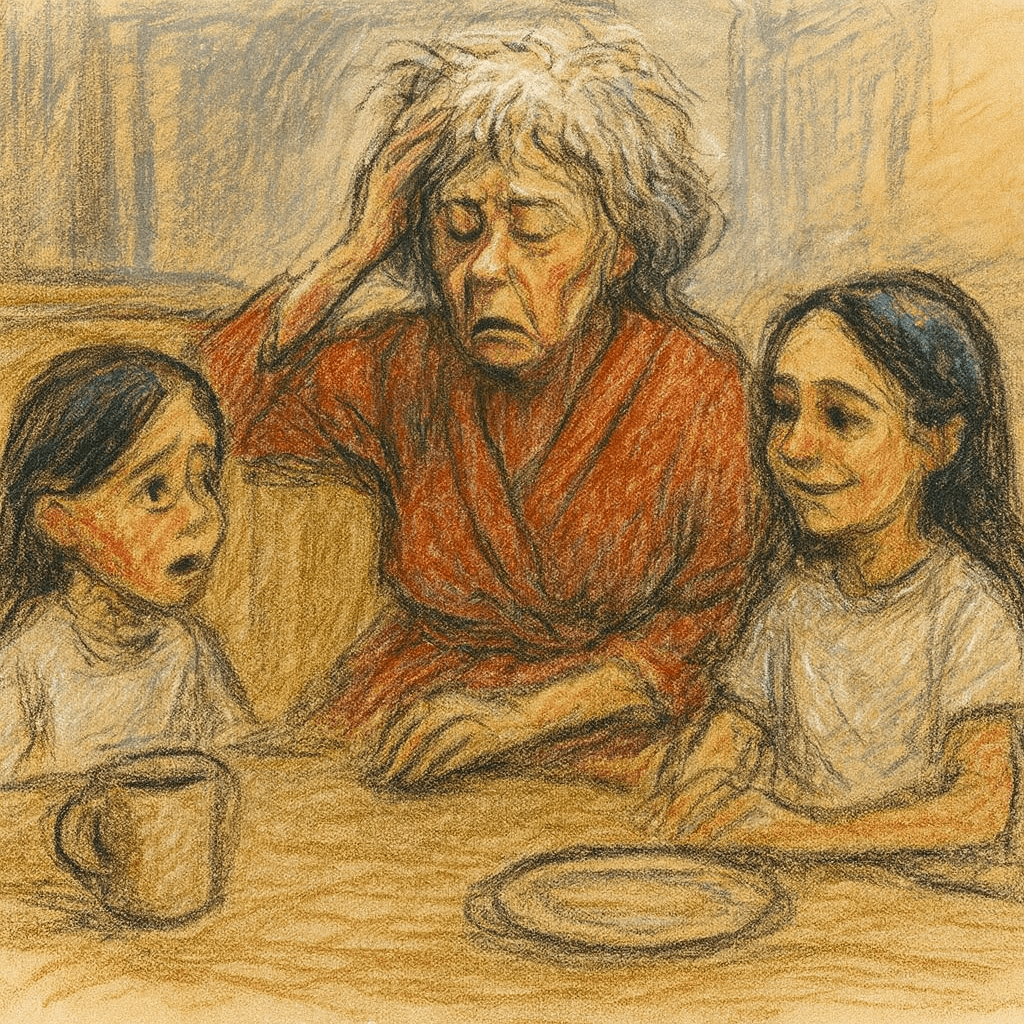
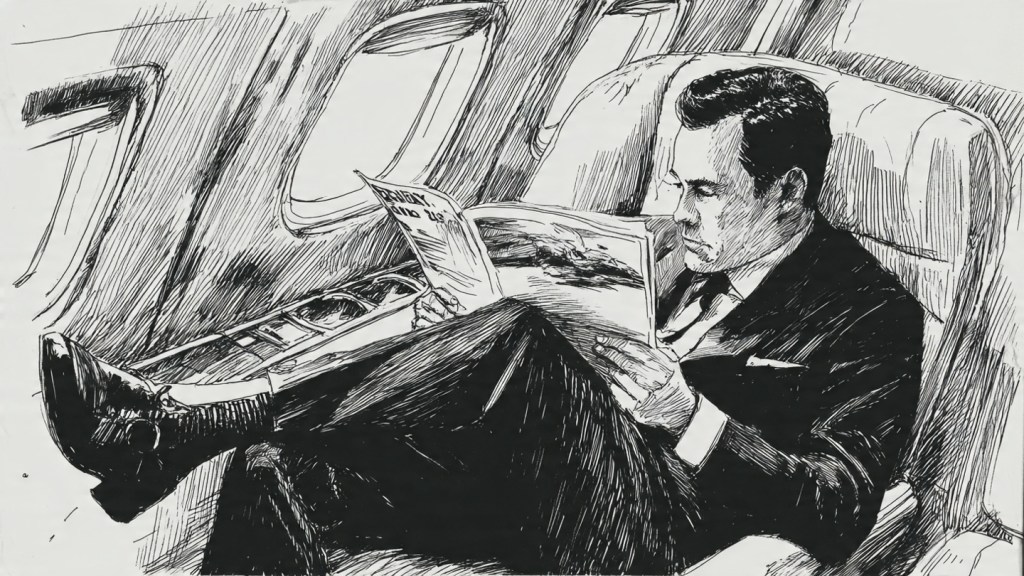
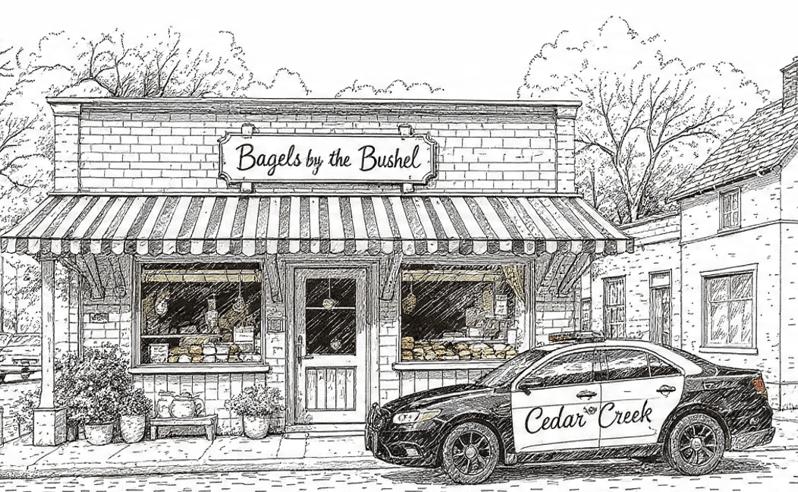
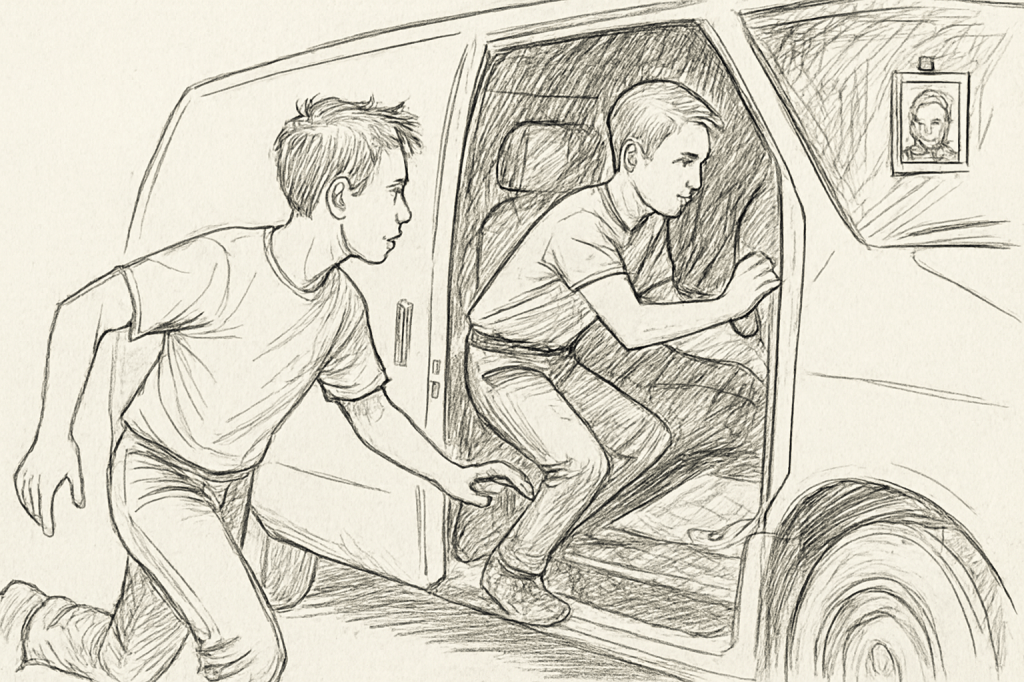
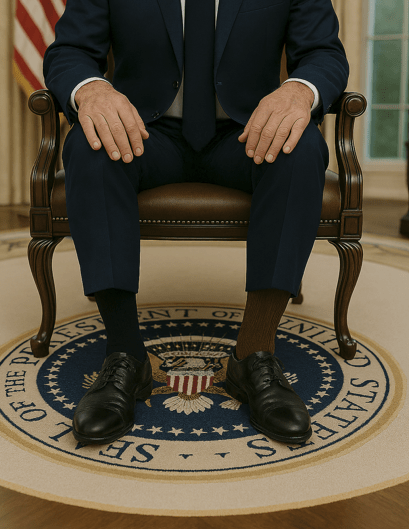
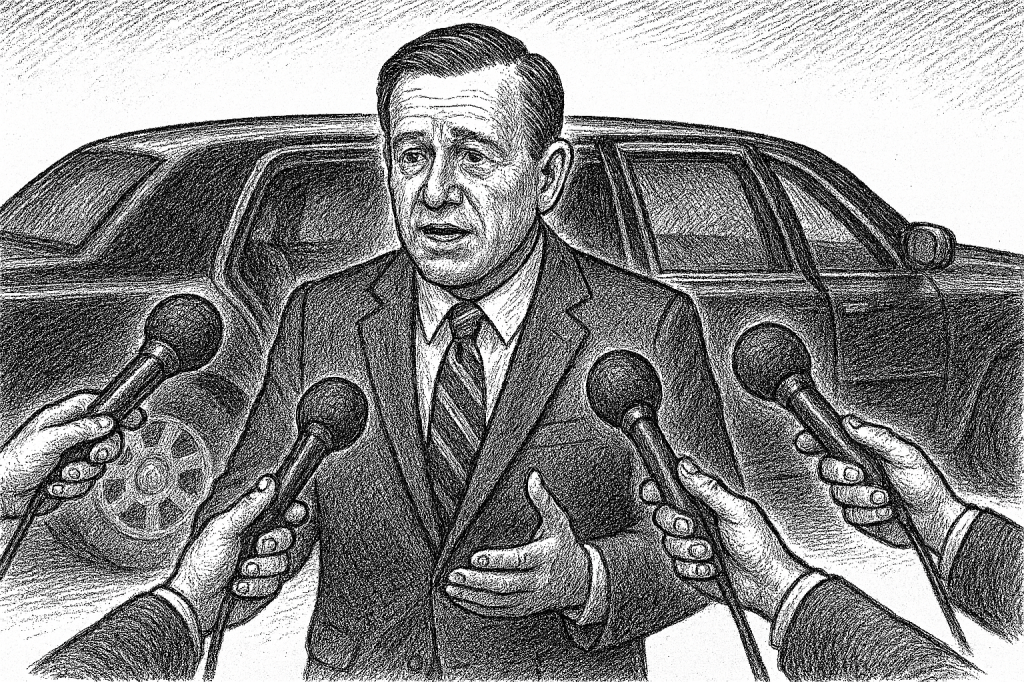
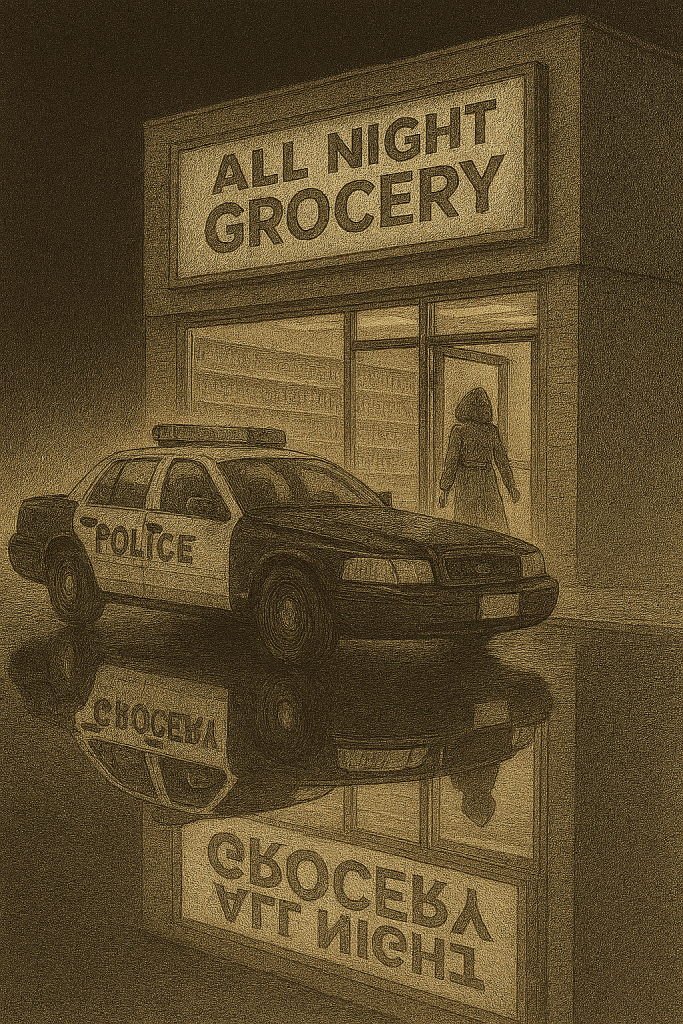
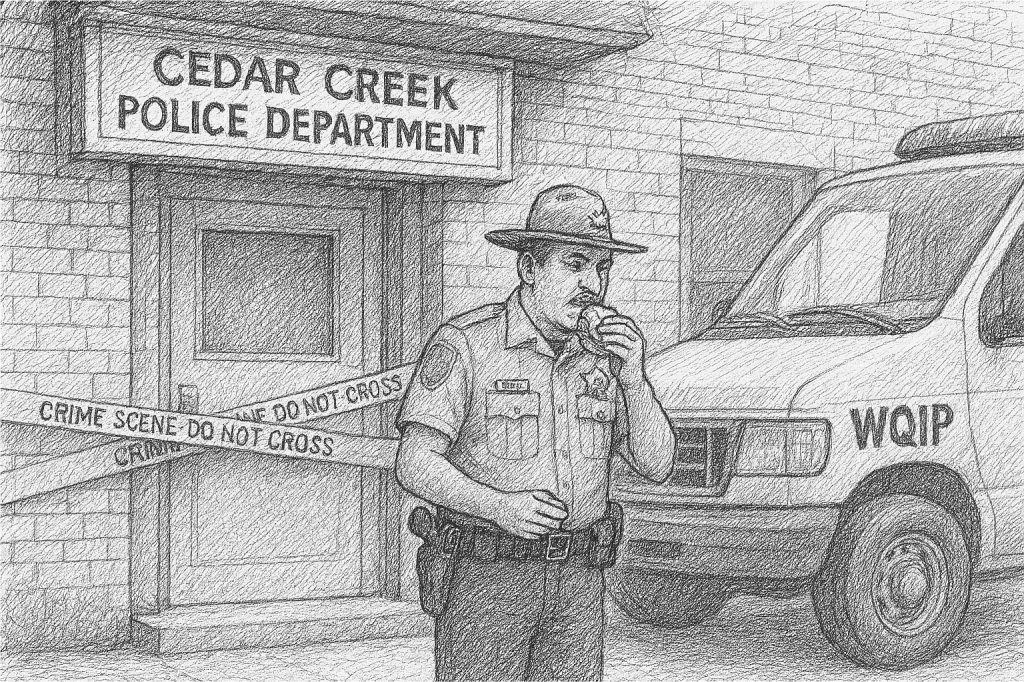

 Monty & McCluskey